Повышение урожайности или защита окружающей среды — поиск баланса с помощью ядерных технологий

Когда речь идет об удобрениях, очень важно соблюдать баланс: если своевременно использовать правильное количество, повысится урожайность, что поможет накормить растущее население планеты, но чрезмерное применение вредит растениям, загрязняет почву и воду и усугубляет проблему глобального потепления. Как найти правильный баланс? Изотопные методы могут в числе прочего применяться для оптимизации использования удобрений, оценки воздействия агрохимических веществ-загрязнителей и определения источников выбросов парниковых газов.

(далее…)


Обеспечение безопасности по-прежнему принципиально важно с точки зрения долгосрочной эксплуатации Армянской АЭС

Вчера в Ереване, Армения, Генеральный директор МАГАТЭ Юкия Амано заявил, что МАГАТЭ продолжит сотрудничество с Арменией, чтобы обеспечить соответствие Армянской АЭС (ААЭС) наивысшим стандартам безопасности.

В ходе встреч с президентом Арменом Саркисяном и премьер-министром Николом Пашиняном обе стороны признали, что обеспечение безопасной эксплуатации АЭС имеет первостепенное значение. «Мы твердо привержены соблюдению всех требований безопасности», — сказал г-н Пашинян.

В ходе разговора с президентом Саркисяном г-н Амано остановился на участии Армении в деятельности МАГАТЭ, в том числе на тесном сотрудничестве по проектам, призванным удовлетворить энергетические потребности страны, и помощи, направленной на расширение возможностей Армении по обучению квалифицированного персонала в сфере ядерных технологий. Они также обсудили поддержку, которую МАГАТЭ оказывает стране в области ядерной медицины и борьбы с раком.


(далее…)


IRSN has published a report on spent nuclear fuel storage

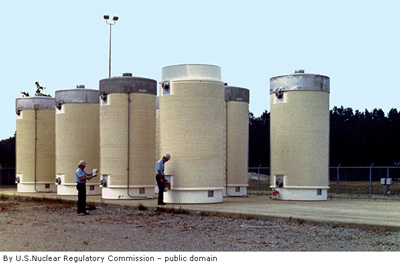
Last June, IRSN submitted a report on the storage of spent nuclear fuel to the Parliamentary lnquiry Committee on the Safety and Security of Nuclear Facilities. ln the report, which is available on IRSN’s website, the Institute examines the concepts of wet and dry storage existing both in France and abroad.

Based on its assessment of spent nuclear fuel storage in France and on knowledge acquired during services performed abroad, IRSN examined the concepts of wet and dry spent-fuel storage developed both in France and worldwide, along with the associated safety issues.

(далее…)


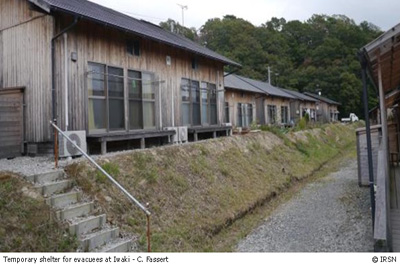
Shinrai: the results of a Franco-Japanese research program on the social consequences of the Fukushima-Daiichi accident

Eight years after the major earthquake that struck the east coast of Japan on March 11, 2011 and the horrific nuclear accident that it caused, IRSN is publishing the results of a study on the management of the post-accident situation in Japan, based on an in-depth survey of Fukushima Prefecture residents.

SHINRAI («Trust» in Japanese) is a Franco-Japanese research project, launched in 2014 by IRSN, Medialab of the Paris lnstitute of Political Studies, and Tokyo Tech. and coordinated by IRSN.

(далее…)


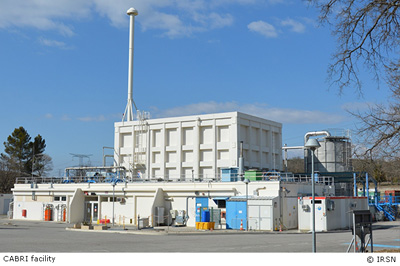
Availability of results from the first CIP test run in the CABRI experimental reactor in a water loop configuration

The aim of IRSN’s CABRI International Program (CIP) is to use experiments to improve our knowledge of the behavior of fuel rods in pressurized water reactors (PWRs) during a power transient accident. The results of the first CIPQ test, which was performed on April 16, 2018 at the renovated CABRI facility equipped with a pressurized water loop, have been analyzed and the corresponding report is ready to be sent to the program partners.

(далее…)


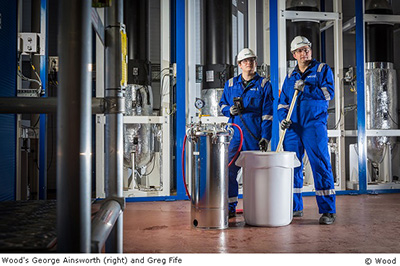
Thought bubble solves hydrogen puzzle

Waste retrieved from the Magnox Swarf Storage Silo (MSSS) at Sellafield is being safely stored in an unencapsulated form for 50-75 years. This has never been done before and it is safety critical that hydrogen generation is measured and managed, especially when the waste first goes into store.

Sellafield Ltd made a commitment to the UK regulator to carry out prompt and accurate characterisation of waste at all times but had to find a non-intrusive and cost-effective way of doing it.


(далее…)


Sealing the deal

Pipework for the shield cooling system at the Palisades nuclear power plant in Covert, Michigan, is buried in concrete.

This means it shares a problem with the UK’s advanced gas-cooled reactors, which have the same design feature. When cooling pipes develop tiny cracks and begin to leak, access is impossible for conventional repair methods such as welding.

(далее…)


Innovation in radiation monitoring

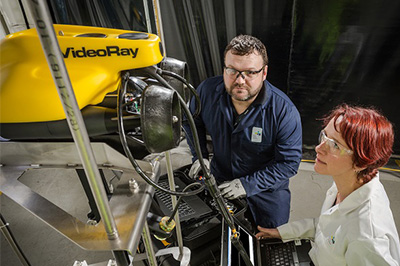
Wood is making radiation monitoring of storage ponds safer and more timely by using specially adapted remotely operated vehicles (ROVs).

Conventionally, samples of pond water are collected manually and sent away for laboratory analysis. This approach exposes workers to increased radiation doses, carries the risk of contamination spread due to dropped samples and never gives a current reading because it takes several days to obtain the analysis results.

In an innovative project at the Sellafield nuclear site in the UK, Wood found a way to speed up the process and minimise human intervention, while still obtaining the highest quality results.

(далее…)


The Effect of Temperatures on the Criticality Safety of Fissile Systems

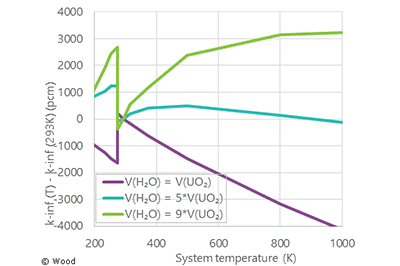
Wood’s Regulatory Support Directorate carried out a study into the effect of temperature on the criticality safety of fissile systems for the Office for Nuclear Regulation (ONR), the UK civil nuclear regulator.

Criticality calculations for fissile material transport packages are typically carried out at room temperature.  However, transport packages may encounter a wide range of temperatures, and the IAEA Transport Regulations state that packages shall be designed for ambient temperatures from ‑40°C to +38°C.  Previous work on temperature effects has mainly looked at the high temperatures found in reactors, but this new study also considers temperatures below freezing.

(далее…)


Making a success of Brexatom

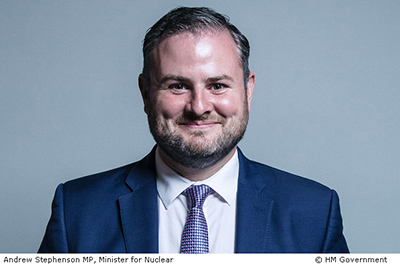
When the UK Government published the draft European Union (Withdrawal) Bill on January 26, 2017, it became clear that Brexit would also mean Brexatom. To the surprise of some, the UK signalled its intention to withdraw from the European Atomic Energy Community (Euratom).

This was driven by a desire to leave the jurisdiction of the European Court of Justice and to end the free movement of people, both of which are enshrined in the Euratom treaty.

At the time of writing, the UK and EU’s efforts to reach a negotiated agreement remain frustrated by politics. But the nuclear landscape appears much more settled than anything else on the Brexit horizon.

(далее…)