Метка: SEC NRS

“INES Classifier” Computer Program Developed by SEC NRS Submitted to NEA Databank

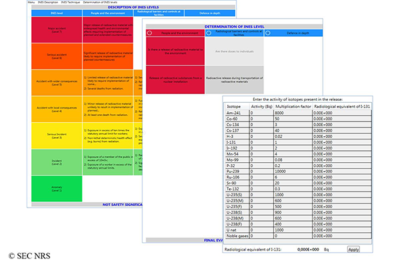
The “INES Classifier” computer program was developed by SEC NRS for scientific and technical support of the Information and Analytical Center of the Russian Regulatory Authority (Rostechnadzor).

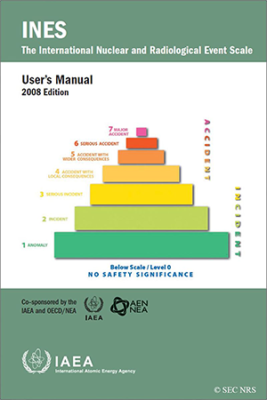
The computer program is based on the methodology outlined in the Guidelines for users of the International Nuclear and Radiological Events Scale – INES (2008 edition) co-developed by NEA and IAEA. The INES is used for prompt and simple communication with the public on events associated with nuclear facilities in terms of their safety significance. The INES classification of events makes it possible to assess the significance level of an event that has occurred for providing instructions, warnings and relevant information to the public for emergency preparedness and response.

The “Classifier INES” computer program is designed for:

  • assessment of events significance level both in general and in terms of their effect on radiation effects, physical barriers and defense in depth levels;
  • minimization of the risk of human errors during determination of an events significance level based on INES methodology;
  • simplifying the methods for assessing the INES level;
  • reduction of human efforts and time which are required for assessments with the INES methodology;
  • automatic generation of reports that contain brief information about the criteria which were used for estimation of an events significance level based on the INES methodology.

The “INES Classifier”Computer program was successfully tested at the Rostechnadzor Information and Analytical Center during emergency response drills at nuclear power plants.

In March 2019 the “INES Classifier” computer program was submitted to the Nuclear Energy Agency Data Bank. To access the program please contact NEA Databank

http://www.oecd-nea.org/tools/abstract/detail/nea-1904/.


Contact
Andrey KIRKIN,
Scientific and Engineering Centre for Nuclear and Radiation Safety (SEC NRS)
kirkin@secnrs.ru

Источник: Eurosafe-forum.org 2019

Software used for safety review of nuclear facilities

Reliability of simulation models for nuclear installations, which are realized applying computer codes, has a vital importance for the safe use of nuclear energy. In the process of development of software that allows forecasting to the last detail of nuclear installations behavior in various operation conditions, as well as in case of an accident, the results of the advanced scientific researches are used. The most remarkable mathematicians, physicists, experimentators and software programmers take part in software development, and all components of the nuclear industry innovative development are involved. It is evident, that soundness of simulation models shall be evaluated and verified at the equally high level which is observed in the process of the software development.

Since 1991, Rostechnadzor applies in its regulatory activity the unique practice of software review, which is implemented by the SEC NRS. Since the very beginning of establishing of the software evaluation system there appeared understanding of the necessity of the open and transparent cooperation among all teams, participating in the development, verification and use of the software applied in the process of safety analysis. That is why the results of the review of such codes shall be definitely the subject to the review by the Expert Council in charge of computer codes certification under the aegis of Rostachnadzor, which includes representatives from more than 40 enterprises of the nuclear industry in Russia. The procedure for the software review was initially forethought to be a free from subjectivity team work of highly qualified specialists in the field of nuclear energy use. The solutions taken by the Expert Council are always based on the cumulative experience and knowledge of the whole scientific and technical society of the Russian nuclear industry, and represent the driving force for the development of innovative projects related to creation of new generation simulation tools and conduct of necessary experimental studies. In 2018, the more than a 25-year successful practice of computer codes review was settled by law, and the relevant amendments were introduced into the Federal Law “On the Use of Atomic Energy”.

Currently, among the most significant challenges in the context of scientific and technical aspects of computer codes development, verification and validation are as follows:

  • updating of the requirements to verification (validation) of computer codes, upgrading of the criteria and forming of approaches to evaluation of the current computer codes (including multi-physical simulation, creation of codes for CFD-DNS type PCs) and digital technologies (artificial neural networks, virtual NPPs and etc.);
  • development of recommendations on estimation of errors and uncertainties of the simulation results (preparation of the draft first revision of the relevant Guide has been planned for the year 2019);
  • the system development of the experimental base and creation of the unified digital base of the evaluated experimental data, which can be used in the process of verification (validation) of the modern computer codes in the field of use of nuclear energy;
  • evolvement of the approaches to rating of computer code users qualification.


Contact
Sergey SHEVCHENKO,
Scientific and Engineering Centre for Nuclear and Radiation Safety (SEC NRS)
sshevchenko@secnrs.ru

Источник: Eurosafe-forum.org 2019

Improving the methods for justification and assessment of long-term safety of the deep disposal facilities for liquid radioactive waste to implement the recommendations of the IAEA Mission

Deep disposal facilities for liquid radioactive waste (DDF LRW) have been operating over 50 years in the Russian Federation. The disposal of liquid radioactive waste (LRW) is carried out by controlled well injection of LWR into deep horizons, isolated from the surface by low permeable rocks and shallow aquifers.

In 2013, the IAEA Mission «International peer review on the deep well injection practice for the liquid radioactive waste in the Russian Federation» was carried out in the Russian Federation. The IAEA Mission resulted in a report containing recommendations for improving the safety in the disposal of LRW in the Russian Federation.

In 2015, the «Program of calculated and experimental studies on justification and assessment of long-term safety of the deep disposal facilities for liquid radioactive waste in order to implement the recommendations of the IAEA mission» was developed. Some parts of this program are implemented by SEC NRS together with some leading academic institutions and ROSATOM’s enterprises.

The first stages of the work focused on consolidation and systematization of information on DDF LRW locations and sites. Information on the geographical, meteorological, geological characteristics of the DDF LRW locations and sites was reviewed; well design features were described; information on the radionuclide and chemical composition of injected LRW was provided, as well as the results of uncertainty estimation of the raw data.

The obtained information was used at the following stages: to prepare the experimental programs for defining parameters necessary for modeling of the processes at the radioactive waste (RW) disposal system; to develop the DDF LRW geofiltration and geomigration three-dimensional models; to analyse events, phenomena and factors which are taken into account in scenario development for the evolution of the RW disposal system.

One way to improve the long-term safety assessment, taking into account the IAEA recommendations, was developing the DDF LRW simulation models and performing predicting calculations to assess long-term safety for RW disposal system after DDF LRW closure. For this purpose, DDF LRW models have already been developed and updated by SEC NRS and new geofiltration and geomigration models have also been developed. So, the Russian-made software tool GeRa (developed by IBRAE RAN) was used for model development. The models were supplemented with planned volumes and LRW characteristics for the period up to DDF LRW planned closure, the boundary conditions for the models were also specified, the ranges of permeability coefficients were defined for horizons and low permeability formations. The preliminary results of calculations performed for the developed scenarios of normal evolution indicated the permissible DDF LRW exposure in the long term.

Fig. Structural model of “Dimitrovgradskiy” DDF LRW built usiFigure Structural model of “Dimitrovgradskiy” DDF LRW built using software GeRang software GeRa

Another area of research within the implementation of the IAEA Mission recommendations is to justify the safety of the DDF LRW closure. To this end, the concept of the DDF LRW closure has been developed, which defines the main stages of work on the DDF LRW closure, including organizational and technical solutions for ensuring safety in and after closure, measures on radiation monitoring, volume and frequency of radiation monitoring and monitoring of the RW disposal system as well as, the procedure of collecting and storing (transmitting) information obtained at various stages of the LRW life cycle.

According to this concept, wells are eliminated using special technologies for reliable isolation of the horizon from the overlying formations, as well as excluding overflows along the annular and intertubular space of well casing strings.

To confirm the safety of the DDF LRW after closure, a set of measures on radiation monitoring of the DDF LRW site and on monitoring of the RW disposal system, as well as environmental components, should be carried out. The duration of the DDF LRW monitoring after its closure depends on the radionuclide composition and total activity of injected LRW and it is defined based on the results of the long-term safety assessment.

Currently, the final report on the implementation of the IAEA mission recommendations is being developed.


Contact
Anton PONIZOV
Scientific and Engineering Centre for Nuclear and Radiation Safety (SEC NRS)
ponizov@secnrs.ru

Источник: Eurosafe-forum.org 2019

Digital strategy of nuclear sector development

Following the already established trend of digital transformation of global world economy, nuclear industry is moving towards post-industrial development. The distinctive feature of the atomic industry transformation is the comprehensive implementation of information processes into all spheres of activity in the field of atomic energy use.
In Russia, a Digital strategy of nuclear sector development designed by the State Atomic Energy Corporation “ROSATOM” is currently being implemented. This strategy established, among other things, broad implementation of modern computer programmes for nuclear facilities simulation, digitization of key processes for development and safety review of innovative nuclear technologies, development and implementation of intelligent systems using various ways of machine learning, as well as broad implementation of digital twins into life-cycle management of nuclear facilities.

SEC NRS as a technical and scientific support organization to Rostechnadzor is committed to the principle of giving priority to the safe use of atomic energy. In this regard, it is involved in shaping an approach to justification and assessment of modern digital technologies used in the nuclear industry. The year 2018 was marked by introducing the amendments into the Federal Law “On the use of atomic energy”, which settled a 25-year successful practice of computer codes review applied in the process of safety analysis. For detailed information about SEC NRS approaches and practices on the software evaluation, as well as on the challenges associated with the safety review of modern digital technologies, refer to one of the articles in this issue of this newsletter.

In this newsletter, we also tried to give examples of SEC NRS R&D on development of in-house computer technologies used within scientific and technical support for safety regulation. First of all, it is necessary to mention the completed works on creation and validation of simulation models for deep disposal facilities for liquid radioactive waste (DDF LRW), and performed predictive calculations of long-term safety estimation for waste disposal after DDF LRW closure. To that end, the DDF LRW models, already established by SEC NRS, have been updated and new geofiltration and geomigration models have also been developed.

SEC NRS provides scientific and technical support to the Rostechnadzor Information and Analytical Center. As a part of this activity, our experts have developed a software tool for automatic evaluation of an event significance level based on the INES methodology. This software was successfully tested at the Rostechnadzor Information and Analytical Center during emergency response drills at nuclear power plants and it was included into Nuclear Energy Agency Data Bank.

Digitalization is one of the key areas of the ongoing improvement of the state regulation system in the use of atomic energy. For example, introduction of digital systems for on-site monitoring and control at industrial facilities provides the possibility to evaluate the accidental risk online depending on the facility operation. However, large-scale implementation of such systems in the control and oversight activity needs to deal with issues related to information and cybersecurity. The global nature of cybercrime allows no other organization to deal with cyberthreats alone, however to minimize the cyberthreats implications, to make the digital world more secure, it would be possible only together, by pooling our efforts. In this regard, this newsletter reflects the SEC NRS experience in defending our information resources against cyberthreats.

A. Khamaza, PhD,
SEC NRS Director, ETSON Vice-president.

Теги: SEC NRS

Information security

The world entry into the digital era, when a human daily life more and more depends on the sophisticated technologies, requires the prompt and timely reaction to new challenges requiring to neutralize the potential adverse occurrences. In our modern society the progression of cyberthreats represents the continually growing threat.
Information security in SEC NRS became one of the development priorities more than three years ago together with the enactment of the «Information Security Concept» that stipulated the priority goals, major objectives, principles and ways to ensure information security and determined the corporate organizational and technical principles to ensure and manage information security, and also developed the unified corporate approaches to ensure security of information processed in the information systems and transmitted through the communication channels.

For the purpose of neutralization of the existing threats and for implementation of measures aimed to prevent infringements onto the information resources of the Centre, within a year we have realized an integrated Project devoted to creation of the information security system on the basis of the threats analysis and prediction.

The Project incorporated three major stages:

  • pre-Project survey of the automated information system (hereinafter to be referred to as AIS) desigened for processing of the sensitive information;
  • modernization of the existing infrastructure in line with the requirements of the legislation in the field of information security;
  • certification tests to check the compliance with the requirements of information security.

At the stage of pre-Project survey, information from each AIS segment of the Center was collected and analyzed in order to elaborate the requirements to information security, to develop recommendations on updating and/or correction of the organizational-administrative documentation, as well as to upgrade and/or extend licences and to adjust the information security equipment. Based on the results of this stage a model of a hacker and information security threats was developed, and the required security level and protection class were determined.

At the second stage of the Project, a set of organizational-administrative documents was updated for all AIS segments, and information security equipment was put into operation.

At the final stage of the Project, the activities on AIS certification were carried out. In frames of this stage a technical certificate was developed together with the tests programme and methodology, which made the ground for the relevant conclusion and issue of a certificate of compliance with the information security requirements.

Stable functioning of information systems, communication equipment, as well as security thereof prevail for the SEC NRS since they are an important factor for the Center effective development in the course of executing tasks related to scientific and technical support of Rostechnadzor on the basis of advanced, including digital, technologies.

Contact

Andrey Balalaechnikov, Scientific and Engineering Centre for Nuclear and Radiation Safety (SEC NRS), balalaechnikov@secnrs.ru.

Source

Eurosafe.

Теги: SEC NRS

Supporting a regulator in the successful hosting of IRRS missions

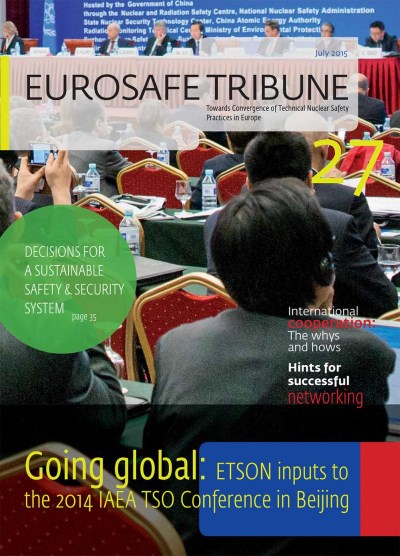
Cover_Tribune_27Alexander Khamaza, Director, Scientific and Engineering Centre for Nuclear and Radiation Safety (SEC NRS) Russian Federation, “Supporting a regulator in the successful hosting of IRRS missions” // Eurosafe Tribune. – July 2015.

Provided at the request of a Member State, the IAEA Integrated Regulatory Review Service (IRRS) is aimed at enhancing the effectiveness of the country’s regulatory infrastructure in the field of nuclear and radiation safety. The initial IRRS mission to the Russian Federation was performed in November 2009 at the official request of the Government. In accordance with the practice in this domain, a follow-up mission was conducted in November 2013 to review notably the 46 measures taken in response to the recommendations and suggestions of the initial IRRS mission. As a TSO of Rostechnadzor, the Federal Environmental, Industrial and Nuclear Supervision Service of Russia, SEC NRS took the most active part in the preparation and conduct of both IRRS missions. Supporting the implementation of Rostechnadzor’s measures, SEC NRS developed its R&D plan which included 29 actions aimed in particular at enhancing the Russian federal legislation in the field of atomic energy use as well as developing new federal regulations and safety guides. Among other support activities, SEC NRS rendered assistance to Rostechnadzor’s Technical Emergency Centre and implemented assessment of additional modules, which were not covered by the initial IRRS mission (“Emergency Preparedness and Response” and “Regulatory Implications of the Fukushima Accident”). Based on the results of their follow-up mission, the IRRS experts confirmed the efficiency and independence of Rostechnadzor as the regulator and recognised the timeliness and effectiveness of the actions taken by the Russian Federation in the wake of the Fukushima Daiichi NPP accident. Following the findings of IRRS follow-up mission Rostechnadzor’s action plan, developed with the assistance of SEC NRS, now includes 24 actions which are due to completion by the end of 2018.

The example of SEC NRS provides an idea of the scope and significance of the activities performed by a TSO to support the regulator and to enhance the efficiency of the country’s nuclear safety regulation drawing upon recommendations from the IAEA. For our partners in ETSON who are planning to host such IAEA missions, the Network is a good platform for sharing – and gaining – practical experience and knowledge in this area.

Поддержка регулирующего органа в успешном проведении миссий IRRS

Александр Хамаза, директор федерального бюджетного учреждения
«Научно-технический центр по ядерной и радиационной безопасности (ФБУ «НТЦ ЯРБ»), Российская Федерация, «Поддержка регулирующего органа в успешном проведении миссий IRRS», // Eurosafe Tribune. – July 2015.

Услуга МАГАТЭ по комплексной оценке деятельности регулирующих органов по обеспечению ядерной и радиационной безопасности (миссия IRRS) направлена на повышение эффективности инфраструктуры регулирующей деятельности государств в области ядерной и радиационной безопасности и проводится по запросу государства-члена МАГАТЭ. В ноябре 2009 года в соответствии с официальным запросом Правительства в Российской Федерации была проведена изначальная миссия IRRS. В соответствии с практикой проведения таких миссий, в ноябре 2013 года состоялась Пост-миссия для оценки 46 мероприятий по реализации полученных в ходе изначальной миссии IRRS предложений и рекомендаций. ФБУ «НТЦ ЯРБ», являющееся ОНТП Федеральной службы по экологическому, технологическому и атомному надзору (Ростехнадзор), принимало самое активное участие при подготовке и проведении обеих миссий. В рамках оказания поддержки по осуществлению запланированных Ростехнадзором мероприятий, в ФБУ «НТЦ ЯРБ» был разработан План научно-исследовательских работ, содержащий 29 мероприятий по совершенствованию федерального законодательства в области использования атомной энергии, а также по разработке новых ФНП и руководств по безопасности. Кроме того, ФБУ «НТЦ ЯРБ» оказало поддержку Ростехнадзору по обеспечению деятельности Информационно-аналитического центра и осуществило оценку дополнительных модулей, не вошедших в область рассмотрения изначальной миссии IRRS («Аварийная готовность и реагирование» и «Учет уроков аварии на АЭС «Фукусима» в регулирующей деятельности»). По итогам пост-миссии эксперты IRRS подтвердили эффективность и независимость Ростехнадзора как органа регулирования, а также признали своевременными и эффективными действия, предпринятые Российской Федерацией в связи с аварией на АЭС «Фукусима-Дайичи». План действий Ростехнадзора, разработанный при поддержке ФБУ «НТЦ ЯРБ» по результатам пост-миссии IRRS, содержит 24 мероприятия, реализация которых запланирована до конца 2018 года.

На примере ФБУ «НТЦ ЯРБ» можно оценить масштаб и значимость деятельности ОНТП по оказанию поддержки регулирующего органа и повышению эффективности государственного регулирования ядерной безопасности с учётом рекомендаций МАГАТЭ. Для наших партнеров в ETSON, которые планируют принять эти миссии МАГАТЭ, Ассоциация является хорошей площадкой для обмена и приобретения практического опыта и знаний в этой области.