Метка: IRSN

Планы удаления битумированных отходов

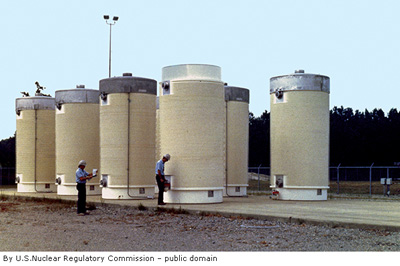
С 1966 г. около 80 тыс. упаковок ядерных отходов были обработаны с помощью битумирования. 50 тыс. из этих упаковок с битумированными отходами должны быть удалены на объекте проекта Cigéo.

11 января 2018 г. Управление по ядерной безопасности (ASN) высказало сомнения в отношении удаления этих битумированных отходов в своем мнении о досье вариантов безопасности, представленном Национальным агентством Франции по обращению с радиоактивными отходами (Andra) для объекта Cigéo. Управление ASN считает, что приоритет следует отдавать усилиям по нейтрализации химической реактивности упаковок битумированных отходов. В то же время следует проводить исследования по изменению проекта, чтобы исключить риск побочных экзотермических реакций. В любом случае, характеристика производителей этих упаковок с битумированными отходами является важной предпосылкой.

Таким образом, в июне 2018 г. министр энергетики и управление ASN поручили провести экспертную оценку, чтобы оценить научные знания, касающиеся характеристики и поведения битумных отходов, актуальность проводимых исследований по нейтрализации химической реактивности упаковок с битумированными отходами, актуальность исследований агентства Andra, направленных на изменение проекта объекта Cigéo, чтобы исключить риск экзотермических реакций.

Отчет об обзоре обращения с битумированными отходами был представлен властям 28 июня 2019 г., а затем в сентябре 2019 г. представлен производителям радиоактивных отходов, агентству Andra, Институту ядерной и радиационной безопасности (IRSN) и рабочей группе по Национальному плану по обращению с радиоактивными материалами и отходами (PNGMDR). Эти выводы открывают новые перспективы в отношении потенциальных условий для принятия битумированных отходов на объекте Cigéo. Они касаются следующего:

  • характеризация и поведение битумированных отходов. Обзорная группа считает, что дополнительные эксперименты смогут подтвердить выводы предыдущей работы, проведенной Комиссариатом по атомной и альтернативным видам энергии (CEA) в отношении температур, при которых могут происходить энергетические реакции;
  • нейтрализация химической реактивности упаковок. Ее промышленная осуществимость еще не доказана. Группа считает маловероятным, что такая установка может быть введена в эксплуатацию до 2040 г., но считает, что исследования следует продолжить и что было бы целесообразно пересмотреть преимущества химического растворения битума, прежде чем окончательно выбрать, какой процесс следует промышленно использовать;
  • изменения в проекте Cigéo. Группа считает, что исследования, проведенные агентством Andra, в краткосрочной перспективе должны привести к разработке, безопасность которой может быть убедительно продемонстрирована. Кроме того, стоимость этого решения для прямого удаления будет намного ниже, чем предварительная нейтрализация реакционной способности отходов.

В рамках пятого издания PNGMDR управление ASN и Главное управление по энергетике и климату (DGEC) уточнят выводы, которые они сделают из этого обзора, и дополнительную работу, которая будет проделана производителями и агентством Andra в ближайшие годы.

Источник: ASN, 20.9.2019
Решение проблемы хранения отработавшего топлива

Ядерные энергетические реакторы, которые производят более 70% электроэнергии Франции, должны иметь возможность отправлять отработавшее топливо в хранилище. В 2011 г. Управление по ядерной безопасности (ASN) обратило внимание компании EDF на вероятное заполнение складских мощностей для отработавшего топлива, и, в соответствии с его мнением от 18 октября 2018 г. о согласованности ядерного топливного цикла во Франции, управление ASN направило ряд запросов для решения этой проблемы.

Национальный план по обращению с радиоактивными материалами и отходами (PNGMDR) на 2016–2018 годы подчеркивает тот факт, что это заполнение может произойти в период с 2025 по 2035 год. Приказ от 23 февраля 2017 г., устанавливающий требования плана PNGMDR, призвал компанию EDF направить управлению ASN варианты технической безопасности, касающиеся создания новых хранилищ отработавшего топлива. В ответ на это требование компания EDF в апреле 2017 г. запросила у управления ASN мнение о вариантах обеспечения безопасности для проекта централизованного хранилища отработавшего топлива.

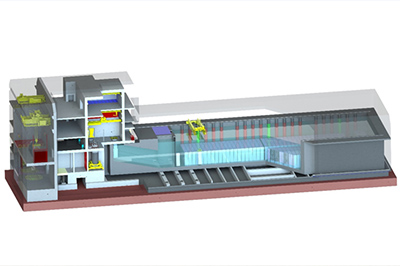
Установка, предусмотренная компанией EDF, представляет собой бассейн, предназначенный для хранения 10 тыс. тонн тяжелых металлов, что соответствует примерно 21 тыс. топливных сборок. Тоннаж тяжелого металла соответствует массе ядерного топлива до выгорания без его структур и без кислорода, с которым он связан. Бассейн будет состоять из двух бассейнов одинаковой емкости для хранения и конструкции, которые будут постепенно вводиться в эксплуатацию в течение определенного периода времени.

Управление ASN проверило этот файл и в этом контексте запросило экспертную оценку Института ядерной и радиационной безопасности (IRSN) и получило мнение Консультативного комитета по лабораториям и заводам (GPU). После этого этапа технической экспертизы управление ASN консультировалось с общественностью по поводу своего проекта с 16 мая по 5 июня 2019 г. После анализа полученных материалов управление ASN 23 июля 2019 г. опубликовало свое мнение, учитывающее замечания общественности.

Управление ASN считает, что общие цели безопасности и принятые варианты проектирования в целом являются удовлетворительными. Тем не менее, необходимы дополнительные исследования и демонстрации, особенно касающиеся проектирования и контроля строительства, чтобы гарантировать долговременную герметичность бассейна.

На данном этапе компания EDF не выбрала места для объекта. После выбора площадки компании EDF необходимо проверить, соответствуют ли выбранные уровни внешней опасности. Управление ASN также отправляет компании EDF письмо с указанием удовлетворительных параметров безопасности, а также дополнительных исследований и демонстраций, необходимых для заявки на получение разрешения на создание хранилища.

Источник: Autorité de sûreté nucléaire, 5.8.2019

IRSN has published a report on spent nuclear fuel storage

Last June, IRSN submitted a report on the storage of spent nuclear fuel to the Parliamentary lnquiry Committee on the Safety and Security of Nuclear Facilities. ln the report, which is available on IRSN’s website, the Institute examines the concepts of wet and dry storage existing both in France and abroad.

Based on its assessment of spent nuclear fuel storage in France and on knowledge acquired during services performed abroad, IRSN examined the concepts of wet and dry spent-fuel storage developed both in France and worldwide, along with the associated safety issues.

The two types of spent fuel storage that could be envisaged (wet or dry) do not serve exactly the same needs: storage in a pool is essential for spent fuel with high residual heat and dry storage is suitable for fuel that has cooled down significantly.

The type of spent fuel (natural uranium ENU, reprocessed uranium ERU, or mixed uranium and plutonium oxide MOX) affects any decision about which type of storage to be used, at least for a certain period of time, because MOX fuels have a higher residual heat for longer period.

From a safety point of view, regardless of the type of storage, the decisive parameter is the residual heat of the fuel to be stored. Wet storage, which generally contains hotter fuel, requires more substantial safety measures than dry storage, for which more passive measures can be implemented. In dry storage, cladding (the first containment barrier) is subject to greater thermal stress and is more difficult to inspect.

As a summary, the types of storage do not meet the same requirements. The choice of storage for a given period of time depends on the type of spent fuel (containing natural uranium, reprocessed uranium, or mixed uranium and plutonium oxide). From a safety point of view, the determining factor is the residual heat of the fuel to be stored, whatever the type of storage.

In order to share its work with its foreign counterparts and to continue discussions on the storage of spent nuclear fuel, IRSN has just published an English version of this report on its website.

To find out more and download the report, visit:
www.irsn.fr/spent-nuclear-fuel-storage


Contact
Igor Le Bars, IRSN
igor.lebars@irsn.fr

Источник: eurosafe-forum 6.2019

Shinrai: the results of a Franco-Japanese research program on the social consequences of the Fukushima-Daiichi accident

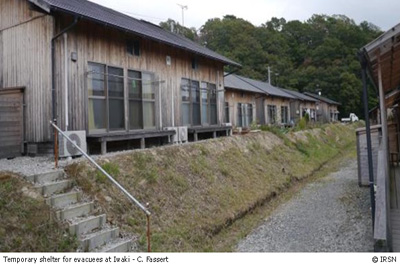
Eight years after the major earthquake that struck the east coast of Japan on March 11, 2011 and the horrific nuclear accident that it caused, IRSN is publishing the results of a study on the management of the post-accident situation in Japan, based on an in-depth survey of Fukushima Prefecture residents.

SHINRAI (“Trust” in Japanese) is a Franco-Japanese research project, launched in 2014 by IRSN, Medialab of the Paris lnstitute of Political Studies, and Tokyo Tech. and coordinated by IRSN.

The Shinrai project is based on survey work (interviews, questionnaires) in Japan with four types of stakeholders:

  • the authorities involved in post-accident management,
  • the scientists and experts involved in support or in opposition with the authorities,
  • nongovernmental associations offering aid to radiological victims and refugees of the nuclear accident,
  • and residents of the Fukushima Prefecture.

The published report, called “Shinrai research project: The 3/11 accident and its social consequences – Case studies in Fukushima prefecture”, is based mainly on an in-depth survey of residents from Fukushima Prefecture. The aim is to investigate the social and political consequences of the Fukushima accident that occurred in 2011. It is primarily concerned with the decision-making methods used by the authorities following the accident and their impact on the population. It is unique in that it provides a multidisciplinary perspective on how is managed the post-accidental situation in Japan.

The study examines the way Japan’s post-accident policy was implemented, including the evacuation of populations, decontamination operations and compensation. It identifies six different reactions from inhabitants on whether or not to return to the evacuated regions, based on criteria such as age, family situation, support for the post-accident policy, and confidence in the assessment of the radiological situation. It also highlights the major role that mayors played, by showing how they tried to meet government requirements while defending the interests and wishes of their constituents. It concludes by questioning the framework on which the Japanese institutions in charge of management have based their post-accident management (such as the attachment of residents to their area, the commensurability of the radiological risk, and zoning as a tool for the radiation protection of populations).

IRSN is now making the study available on its website to French and international bodies responsible for defining post-accident policies, for whom it will provide a basis for further reflection.

To learn more on the Shinrai project:
https://www.irsn.fr/en/research/research-organisation/research-programmes/shinrai-project/Pages/SHINRAI-project.aspx

To download the report:
https://www.irsn.fr/FR/connaissances/Installations_nucleaires/Les-accidents-nucleaires/accident-fukushima-2011/fukushima-2019/Documents/IRSN-Fukushima-2019-rapport-Shinrai-evacues_201903.pdf


Contact
Christine Fassert, IRSN
Christine.Fassert@irsn.fr

Источник: eurosafe-forum 6.2019

Availability of results from the first CIP test run in the CABRI experimental reactor in a water loop configuration

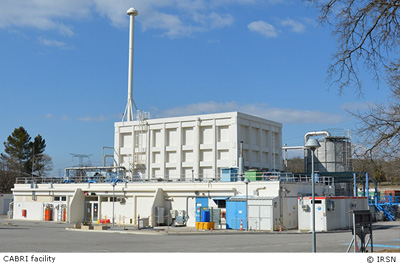
The aim of IRSN’s CABRI International Program (CIP) is to use experiments to improve our knowledge of the behavior of fuel rods in pressurized water reactors (PWRs) during a power transient accident. The results of the first CIPQ test, which was performed on April 16, 2018 at the renovated CABRI facility equipped with a pressurized water loop, have been analyzed and the corresponding report is ready to be sent to the program partners.

The CIPQ test successfully qualified the renovated CEA-owned CABRI facility and its instrumentation. The test used a 560-mm test rod consisting of 48 MOX fuel pellets with Zircaloy 4 cladding, previously irradiated during three cycles in a 900 MWe PWR.

Analysis of all the experimental data acquired in real time and in the post-test phase shows very satisfactory consistency between the different measurements, and reveals two areas of rod failure with fuel dispersion in the coolant. The failures were observed at the top (along a length of around 110 mm) and at the bottom (along a length of around 80 mm) of the fissile column at diametrically opposite angles (180o/200o and 0o respectively).These results will be supplemented by non-destructive and destructive examination of the rod to better understand the thermomechanical phenomena at work during the test and to analyze the cladding failure scenario in more detail.

The experimental measurement analysis report will soon be sent to the 15 international partners in the CIP program, who are from 12 countries. In parallel, teams from IRSN and the CEA are already starting to prepare for the next two CIP tests, which will be performed in 2020.

To learn more:
https://www.irsn.fr/cabri-en

Contact
François Barré, IRSN
francois.barre@irsn.fr

Источник: eurosafe-forum 6.2019