Планы разработки месторождения урана в Канампалли

Корпорация «Uranium Corporation India Limited» (UCIL) будет разрабатывать крупнейшее в Индии месторождение урана, что потребует инвестирования около 845 млн долл. США. Корпорация прогнозирует добычу 6000 т/сутки.

Месторождение в Канампалли, в южном индийском штате Андхра-Прадеш, будет больше, чем существующие урановые ресурсы корпорации UCIL, расположенные поблизости в Туммалапалли и Турамдихе, в восточном штате Джаркханд, которые дают в среднем 3000 т/сутки урана.

В настоящее время корпорация UCIL находится в процессе установления границы горного отвода. Вскоре корпорация обратится к федеральному правительству за разрешением на очистку леса и к правительству штата для получения сертификатов для контроля загрязнения.

Поскольку стратегические атомные элементы входят в компетенцию Департамента по атомной энергии, Департамент по атомным минералам отвечает за ресурсы месторождения в Канампалли, и после получения всех разрешений от различных федеральных правительств шахта будет передана корпорации UCIL для разработки. Корпорация UCIL сообщила, что для получения всех федеральных разрешений потребуется около шести месяцев, после чего начнется разработка запасов урана. Для запуска производства в шахте на полной мощности потребуется около семи лет.

Корпорация UCIL также проводит расширение своих урановых рудников в Туммалапалли и Турамдихе, чтобы увеличить производственную мощность до 4500 т/сутки, но рудник Канампалли по-прежнему будет самым крупным уранодобывающим рудником в стране.

Корпорация UCIL выделила капитальные затраты в размере 1,47 млрд долл. США для наращивания мощностей существующих рудников, а также для реализации 13 проектов, включая разработку новых ресурсов, расположенных в южном штате Теленгана.

Как и в случае с несколькими урановыми проектами в Индии, корпорация UCIL сталкивается с проблемами, связанными с загрязнением, сопротивлением местных жителей в отношении повторного размещения и удаления радиоактивных отходов. В настоящее время самой большой проблемой, стоящей перед корпорацией, является сопротивление со стороны местного населения и неправительственных организаций, утверждающих, что радиоактивные отходы с хвостохранилищ на шахте Туммалапалли просачиваются в подземные воды в соседних деревнях.

Местные политики утверждают, что на образцах из буровых скважин, отправленных на испытания в Центр материаловедения и электронных технологий, установили уровень содержания урана более 4000 частей на миллиард.

Секция ученых также утверждала, что пруды-хранилища отходов не были покрыты полиэтиленовыми листами, как предписано Советом по регулированию атомной энергетики, что привело к просачиванию радиоактивных отходов в окружающие грунтовые воды.

Источник: Mining Weekly, 27.11.2019

Закрытие контракта по установке для производства МОКС-топлива

Национальное управление по ядерной безопасности (NNSA) Министерства энергетики (МЭ) достигло всеобъемлющего соглашения об урегулировании с компанией «MOX Services» и ее материнскими компаниями, чтобы разрешить все вопросы закрытия контракта, относящегося к проекту установки по производству смешанного оксидного топлива (МОКС-топливо) в Саванна-Ривере (Айкен, штат Южная Каролина).

Соглашение позволяет управлению NNSA продвигаться вперед со стратегическими планами по выполнению задач национальной безопасности по более разумной цене для налогоплательщиков. После принятия решения о прекращении проекта по МОКС-топливу в 2018 г. управление NNSA продвинулось вперед как в отношении удаления избыточного плутония, так и в отношении шахты для производства плутония из-за ряда юридических споров с подрядчиком проекта по МОКС-топливу. Все эти вопросы решаются в соглашении.

Теперь управление NNSA может полностью сосредоточиться на предложении по перепрофилированию завода по производству МОКС-топлива для шахты для производства плутония. США должны поддерживать безопасное, обеспеченное и надежное ядерное сдерживание. Хотя управление NNSA продвигается вперед с планами перепрофилирования установки для производства МОКС-топлива, управление NNSA по-прежнему привержено удалению избыточного плутония из Южной Каролины с использованием проверенного метода разбавления и удаления.

Соглашение разрешает все судебные споры по контракту и покрывает стоимость закрытия контракта. Если продолжить, МОКС-проект не будет завершен до 2048 года и будет стоить 17 млрд долларов. Соглашение о всеобъемлющем урегулировании разрешит все правовые вопросы, за исключением возможных претензий.

Источник: National Nuclear Security Administratio, 19.11.2019

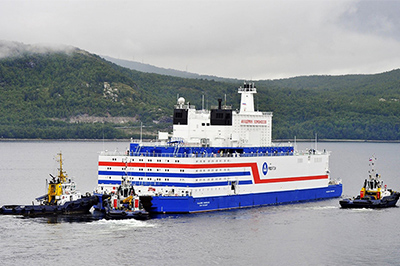
The ‘Akademik Lomonosov’ Floating Power Unit has arrived at the port of its permanent location in Chukotka region of Russia

On September 9, 2019 the world’s only floating power unit (FPU) that left Murmansk on August 23 together with the Dickson icebreaker and two towboats reached town of Pevek, Chukotka Autonomous Region, ahead of schedule.

On September 14 an official welcoming ceremony took place in Pevek.

All in all, FPU travelled 2 640 miles (4 888 km) since its towage from the quay in Murmansk to Pevek.

At the moment, the floating nuclear power unit is located at the anchorage  a few hundred meters away from the seashore. The station team and the Pevek harbor captain have started elaborating the plan for the powership mooring at the wharf. In the meantime, the floating power unit undergoes activities related to nodes and mechanisms damage control test following a long trip.

Following the mooring and the connection to the grid, the floating power unit will become a fully-fledged power facility as a part of the Floating Nuclear Thermal Power Plant (FNPP), which will become the most northern floating NPP both in Russia and in the world, making the Bilibino NPP a runner-up.

Once the FNPP is launched, the number of nuclear power plants in Russia will increase from ten to eleven.

It is expected that the first kilowatt-hours will be produced in December 2019. In the future, it is supposed to replace the generating capacities of the Chaun-Bilibino load center – the Chaun CHPP in the city of Pevek and the Bilibino NPP in the city of Bilibino.

Since the floating nuclear thermal power plant is going to be located in Pevek, it will spur the social and economic development of the Chaun municipal district and Chukotka in general. Besides, the plant will become one of the key infrastructure elements within the Northern Sea Route development program as it will facilitate all-year round icebreaker support, which, in turn, will enable major logistics projects around the Pevek port, where the floating power unit is going to be located.

Rosenergoatom (the Russian NPP utility) has got the permission to operate the floating power unit for 10 years until 2029. The license has been granted by the Federal Environmental, Industrial and Nuclear Supervision Service (Rostechnadzor). SEC NRS being a technical and scientific support organization of Rostechnadzor has performed a range of safety reviews on the ‘Akademik Lomonosov’ FPU in the framework of licensing procedure.

Since the beginning of the ‘Akademik Lomonosov’ FPU development one of the most important issues has been to identify if the existing international and national legal framework concerning ships and other watercraft with nuclear reactors and merchant shipping safety are applicable to the FPU as it defines the possibility of the creation of such an innovative project in the field of atomic energy use.

SEC NRS has significantly contributed to the possibility of creation and further safe operation of transportable electric power sources on the basis of watercraft nuclear reactors.

At the beginning of the ‘Akademik Lomonosov’ FPU project relying on SEC NRS technical and scientific support, Rostechnadzor and the Federal agency on atomic energy took the Joint decision “On the use of legal framework and equipment production start-up procedure for a pilot floating power unit”.

Subsequently, in order to enhance and update the legal framework shaping the principles of safe atomic energy use at such installations as vessels and other floating facilities with nuclear reactors, SEC NRS has developed a phase-by-phase plan of development and enhancement of the federal rules and regulations in the field of atomic energy use.

Step-by-step implementation of this plan resulted in the development and adoption of the following federal rules and regulations:

1.       Basic requirements for the safety of vessels and other floating facilities with nuclear reactors. NP-022-17.

2.       Rules for the safety of vessels and other floating facilities with nuclear reactors. NP-029-17.

3.       Requirements for quality assurance programmes for nuclear facilities. NP-090-11.

4.       Safety Rules for Decommissioning of Ships and other Floating Crafts with Nuclear Installations and Radiation Sources. NP-037-11.

5.       Provisions on the Procedure for Investigation and Accounting of Malfunctions in Operation of Ships with Nuclear Installations and Radiation Sources. NP-088-11.

Additionally, SEC NRS has carried out the research “Comparative analysis of requirements for equipment, components, materials and semi-finished products supplied to nuclear ships and watercrafts enumerated in the Russian Maritime Register of Shipping (RS) Rules and the federal rules and regulations in the field of atomic energy use for nuclear ships and floating facilities and development of recommendations for the procedure to assess the equipment compliance with the requirements in the field of atomic energy use related to nuclear ships and floating facilities.

Results of the research paved the way for the joint decision on the procedure for compliance assessment of equipment, components, materials and semi-finished products supplied to nuclear ships and floating facilities. This decision allowed to exclude financing of overlapping works on compliance assessment without loss of production quality and reduction of safety of such nuclear installations as FPU.

In compliance with the terms of reference and contracts with Rosatom the guideline documents of FPU operating organizations on FPU commissioning and violation investigation have been developed.

Currently SEC NRS takes active part in the Kurchatov Institute and the IAEA research on scenarios of factory fuel loaded SMRs deployment in the framework of TNPP-2 INPRO project and in the discussions dedicated to the issue of SMR development at national scientific forums.

Relevant information:

The ‘Akademik Lomonosov” floating power unit (FPU) is a main project in a series of transportable small modular units. The FPU is designed to work as a part of the Floating Nuclear Thermal Power Plant (FNTPP) in the Far North and the Far East and is of a new class of power sources based on the Russian technologies of nuclear shipbuilding. It is designed with a great margin of safety to exceed external threats. The nuclear power plant has two KLT-40S reactor units that can generate up to 70 MW of electric energy and 50 Gcal/hr of heat energy, which is enough to keep the activity of the town populated with 100,000 people. Rosatom is currently working on second-generation FPUs, i.e. Optimized Floating Power Unit (OFPU), which will be smaller and more powerful than its predecessor. It is intended to be equipped with two RITM-200M reactors with a total capacity of 100 MW.

Источник: eurosafe-forum, November 2019

Identifying a disturbance root-cause from ... noise!

Time-series analysis methods are commonly used in many research areas for extracting useful information related to the structure and the characteristics of the analysed system. Inferring the underlying interconnections between signals of complex systems such as the human brain, social networks, stock markets, etc., is a challenging and complicated task. Similar developments and applications of time-series analysis techniques for monitoring and diagnostics of the nuclear reactors’ operation continue to be a hot topic of research. The so-called causality analysis is commonly used in various research fields for identifying the cause-and-effect relationships between signals within multivariate and complex models. This work summarizes a systematic approach for applying the causality analysis technique, for the first time, on nuclear reactor systems.

To this aim, the most prominent causality measures have been implemented in the PSI signal analysis methodology and both simulated and measured plant data have been analysed. Results show that, the current analysis is able to identify accurately the importance and the central role of the activation signal when it is applied on a simple analytical mode. In addition, the application on a more realistic and complex measured data set of a Swiss boiling water reactor (BWR), illustrates the capability of this analysis to indicate possible causes behind the noticed anomalies or trends observed at certain conditions, and more importantly, allows a better understanding of the underling interactions among different neutronic and thermal-hydraulic processes.

Methodology: From raw noisy data to signals’ connectivity patterns

The PSI connectivity analysis methodology is fully developed in the MATLAB environment and has been, appropriately, adjusted in order to analyse efficiently and in a user-friendly manner either simulated or measured nuclear reactor data. The flow chart of the PSI connectivity analysis methodology is summarized in Fig. 1.

This methodology consists of a set of MATLAB scripts, comprising basic signal analysis functionalities and advanced causality analysis techniques. The PSI connectivity toolbox is divided in two main parts, i.e. the time- and the frequency-domain analysis parts. First, any data set (composed of simulated or measured raw data) is imported in the toolbox in an EXCEL/MATLAB matrix or in ASCII format. The input data corresponds to a set of simultaneously recorded time signals of various parameters (e.g. in/ex-core neutron detector responses, coolant temperature and flow responses, valves’ opening positions, etc.). These signals are analysed in a preliminary stage (i.e. data post-processing) in order to extract the first indications about their quality. To this aim, the raw data are screened in the time-domain and any erroneous or faulty recorded signals are identified and removed from the further stages of the analysis, since they will disturb the causality analysis functionality. In addition, key statistical quantities are estimated for each time signal (e.g. mean value, standard deviation, noise to signal ratio, etc.), and therefore, a preliminary identification of the data set’s structure is achieved.

Next, a Multi-Variate Autoregressive (MVAR) model is fitted to the multi-variate set of input signals. This is a key step of the connectivity analysis methodology, since all the causality measures will be estimated based on the model coefficients, to be evaluated at this stage. The fitting process requires the evaluation of the optimal model order and the estimation of an appropriate fitting algorithm, ensuring the best possible fitting approach and consequently avoiding any over- or under-fitting. Various algorithms (such as the Bayesian Information Criterion, the Akaike Information Criterion, the Final Prediction Error Criterion, and the Hannan-Quinn Criterion) have been implemented in the PSI connectivity toolbox, and the criterion that is associated with the minimum model order is further used in the connectivity analysis. In addition, the Vieira-Morf, Nuttel-Strand, Least-Square Estimation and ARfit algorithms for the MVAR fitting of the analysed data-set are all available in the PSI toolbox. After that, the estimated MVAR model coefficients are transformed in the frequency domain, and the most prominent causality analysis estimators are evaluated. These are: the renormalized partial directed coherence (rPDC), and the directed transfer function (DTF). The rPDC indicates the direct interconnections between the analysed signals, whereas, the DTF reflects how the signals are driven from an activation source.

Finally, the connectivity analysis results are summarized using the so-called connectivity graphs, following the principles of the graph theory. The connectivity graphs are used not only for the visualization of the connectivity analysis results, but also for estimating the topological characteristics which offer a further understanding of the signals’ significance within the analysed system.

Application on real BWR data

To illustrate the capabilities of this approach, the PSI connectivtiy analysis methodology is applied on real plant data originating from the Swiss Leibstadt nucelar reactor (KKL). The analyzed data set corresponds to low power (18.8 %) and low coolant flow rate (33.5 %) conditions, during the generator synchronization. The systematic analysis of the plant data by using the PSI stability methodology revealed high decay ratios (i.e. DR=0.6 – 0.9), at the very low resonance frequency of 0.27 Hz for most of the in-core neutron detectors. It is well known in stability analysis, however, that at such low core power/flow levels, the reactor core is expected to be very stable, and therefore, the source of such high decay ratios is intended to be estimated via connectivity analysis. The extended statistical and post-processing analysis of the measured data in both the time- and frequency-domain revealed which signals are exhibiting a distinct oscillatory behavior during this measurement. Fig. 2 presents the time- and frequency-dependent behavior of these reactor signals: steam flow (QS), core pressure (PC), core coolant flow (QC), turbine bypass control valve (TBCVNM) and average power range monitor (APRMA). All signals have a sampling frequency of 8 Hz and have been recorded over 100 sec. These signals, and in particular the QS, PC, and TBCVNM, exhibit a clear oscillatory behavior at the resonance frequency of 0.27 Hz, with an almost noise-free response (nearly pure sine wave) of the opening position of the turbine bypass control valve TBCVNM.

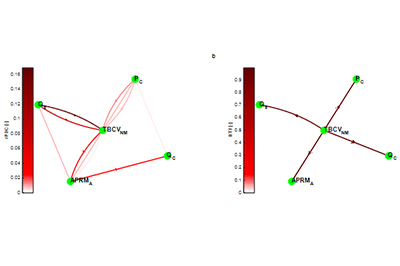
For this example, the MVAR model order is estimated by the Bayesian Information Criterion (p=6). Then a MVAR model based on the Nutall-Strand algoritm is fitted to the simulated data for estimating the model coefficients. The rPDC and DTF causality measures are estimated based on the trasnsformed MVAR model coefficients and their results are summarized in the network graphs, in Fig. 3. The TBCVNM signal clearly drives the response of both the steam flow and the neutron signal, based on the rPDC analysis. In addition, the bypass control valve fluctuation is evidently propagating throughout the entire system, based on the DTF analysis, indicating its essential impact during the synchronization of the generator. The key role of the TBCV can be explained by the fact that throughout the generator synchronization the turbine control valves (TCVs) are only partially open as the steam is dumped to the condenser. During the analyzed operation stage, the opening positions of the TBCVs are adjusted based on the steam dome pressure control system until the generator is synchronized and the steam is directed to the TCVs. Therefore, when the steam dome pressure exceeds certain limits then the TBCVs positions are opening and vice‐versa (this is why an interconnection is observed from PC to TBCV in Fig. 3a). Consequently, the TBCVs exhibit the oscillatory behavior, as depicted in Fig. 2a, and interfere with all the other reactor processes, as the connectivity networks indicate in Fig. 3.

The results of this example clearly show the central role of the bypass control valves in affecting the reactor system, through the estimation of the rPDC and DTF measures. It can be concluded therefore that, the PSI connectivity analysis has been successfully applied, for the first time, in the nuclear reactor field, and has led to a comprehensive study allowing the identification of the relationships between different processes, and more importantly, estimating the causes triggering certain disturbances or anomalies in nuclear reactors.

Источник: eurosafe-forum, November 2019

Cladding tubes and their properties

One of the broad research areas at PSI covers the topic of energy. Part of that, in turn, is the research for nuclear energy and safety. And one of the research groups based here is engaged with nuclear fuels. Johannes Bertsch is the head of this group and investigates the importance of so-called cladding tubes and their protective layers.

Johannes Bertsch could probably sketch the construction of a nuclear power plant blindfolded, especially when it comes to the core of the plant: How many fuel rods, made of what materials, are arranged in how many bundles. He has the numbers, dimensions, and facts in his head. He is the head of the Research Group for Nuclear Fuels at PSI, and his area of expertise are the sheaths of the fuel rods: the so-called cladding tubes.

The cladding tubes enclose the energy source of the power plant, the fissile uranium. In other words: The uranium is pressed into tablet-shaped ceramic pellets which are then stacked inside the cladding tubes. Typically four metres long, the cladding tubes have a diameter of one centimetre and a wall thickness of only 0.6 millimetres – so these are very long tubes, about as big around as a finger, with thin walls made of a special alloy. In the core of a nuclear power plant, there are typically several tens of thousands of them.

The cladding tubes are designed to withstand high temperatures and pressure during operation; they should not develop any cracks even after the removal of the spent fuel rods from the reactor, and they should survive transport undamaged – first to an interim storage facility and later to permanent storage. Therefore the cladding tubes aren’t made from just any sheet metal, but rather from a very finely balanced metal alloy: to 98% zirconium are added well thought-out amounts of chromium, iron, nickel, niobium, and tin. This special alloy is manufactured using a process just as special: melted, cooled in a controlled way, drawn, hammered and annealed. The result is a metal that, viewed microscopically, consists of tiny crystalline grains whose size is just as optimised as their internal crystalline orientation. There are decades of research and optimisation behind that, Bertsch says.

Today this optimisation process is mainly focused on one concern: Hydrogen should penetrate as little as possible into the metal of the cladding tubes, because there the hydrogen forms bonds with the metal atoms that could weaken the material of the cladding tubes.

The hydrogen itself comes from the water that – at least in the Swiss nuclear power plants – is essential. During operation, water continuously surrounds the fuel rods, cools them, and removes the heat arising from the fission of the atomic nuclei. This creates steam that drives the large turbines by which, ultimately, the nuclear power plant produces electricity.

So there’s no way to avoid the hydrogen. But what happens when the small atoms of hydrogen wangle their way into the atomic lattice of the metal alloy?

“Like sugar in coffee”

“First, the hydrogen is dissolved in it”, Bertsch says. Although these are single atoms in a solid material, the researchers talk about it as a solution. “It is actually like sugar in coffee”, Bertsch continues. And from the coffee, you know: If it’s too much sugar, or if the coffee is too cold, the sugar does not dissolve any more, and it accumulates on the bottom of the cup.

Here the analogy ends; there is no bottom of the cup. What actually happens: The hydrogen no longer moves freely through the material, but instead chemically bonds with the metal atoms to form a hydrogen-metal compound. A hydride, as the researchers call it.

The problem with these hydrides: “They form elongated, platelet-like, criss-crossing structures in the metal of the cladding tube. And these are weak points in the material.”

Imaging with neutrons makes hydrogen visible

The PSI researchers who work with Johannes Bertsch concern themselves with everything related to these hydrides. How do they alter the stability of the material? How can they be minimised? How can it be ensured that all cladding tubes stay intact at all times? “We are expanding the knowledge that exists in this context”, Bertsch says.

To do that, he and his colleagues rely on a method of imaging by means of neutrons. Neutron imaging, as it is called, is a method that was perfected at PSI and is regularly carried out by one of PSI’s own research groups at the local neutron source SINQ, with one of the world’s best neutron microscopes. With it, the most diverse types of objects can be examined.

Zirconium is virtually transparent for neutrons. That accounts for its use as the main component of the cladding tubes, since in the operation of a nuclear power plant, free neutrons are a desirable product. In addition, this proves to be an advantage in neutron imaging, because unlike zirconium, hydrogen reveals itself in neutron images as a dark contrast.

Protective layer may also help against hydrides

In one of their newest research projects, Bertsch’s research group is studying the additional protective layer on cladding tubes: So-called liners are used worldwide, and particularly in Switzerland. They protect the cladding tubes against mechanical damage and against oxidation.

Liners, Bertsch and his colleagues found, have a positive side-effect in eliminating hydrides: Cladding tubes equipped with such a protective layer exhibit less hydrides underneath. “The hydrogen penetrates more and more into this layer and already gets stopped there”, says Bertsch, summarising the research results. “You can say the liner is like a sponge for the hydrogen.” It’s as if a person in a bathrobe were to walk in drizzling rain: The terry cloth soaks up the water, and the skin stays dry.

Since it is already clear that hydrides weaken the cladding tubes mechanically, the researchers now venture the cautious statement that the liners, which were introduced originally for other reasons, probably make the cladding more stable in the long run.

“Ultimately, it’s our job to better understand how to make the operation and the handling of spent fuel rods even safer”, Bertsch says. “To do that, we investigate the details of the material’s internal structure. How the hydrides arise, how they are distributed, how they weaken the material – and above all, how they can be minimised.”

International interest

The comprehensive research on hydrides that Bertsch and his team are engaged with is first and foremost aimed at ensuring the safety of the nuclear facilities in Switzerland. But their work also meets with great interest internationally. “We get inquiries from Germany, where the reactors are now being shut down, and we have already been invited to the USA”, Bertsch relates. “Hydrides in cladding tubes are actually a hot topic in the research world.”

Источник: eurosafe-forum, November 2019

Теги: Bertsch, PSI

Nuclear data for nuclear installations: Radiochemistry improves the precision of the cross-section data of long-lived radionuclides

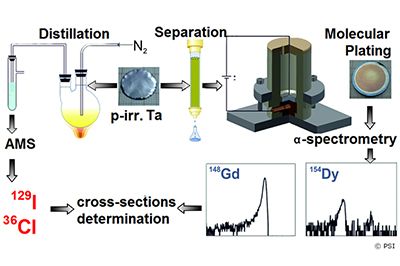
Proton irradiations of lead, tantalum, and tungsten targets were performed twenty years ago at the SATURNE II synchrotron of the Laboratorie National Saturne (LNS) at Saclay. Due to a long time after irradiation, the short lived reaction products had already decayed. These targets were used to determine the production cross sections of long-lived α-emitting radionuclides (148Gd (T1/2 = 74.6 y), 154Dy (3 × 10⁶ y)) and the long-lived β-emitting radionuclides (36Cl (T1/2 = 3.01 × 10⁵ y) and 129I (T1/2 = 0.57 × 10⁷ y)).

As a first step, radiochemical separation methods were developed to isolate these radionuclides. After separation, the measurements of 129I/127I and 36Cl/35Cl ratios were performed with accelerator mass spectrometry in collaboration with the Laboratory of Ion Beam Physics, ETH Zurich. Molecular plating technique was used to prepare thin and homogeneous lanthanides samples to obtain a good quality α-spectrum with high resolution and small low energy tail contribution. Autoradiography and focused ion beam/scanning electron microscopy techniques were used for the characterization of the lanthanide deposited layer.

The experimental results were compared with the theoretical calculations obtained with the combination of Liège intra-nuclear cascade (INCL++) and de-excitation phase (ABLA07) codes in collaboration with CEA/Saclay. The comparisons showed a satisfactory agreement for the 148Gd, 129I, and 36Cl cross-section results. In our work, it is clearly shown that radiochemical separation has a high impact for improving the accuracy of the results. However, theoretical 154Dy cross sections data were underestimated, which could be due to the high uncertainty of the accepted half-life value of 154Dy (3±1.5 My). Therefore, to increase the accuracy of the experimental cross-section data more precise half-life measurements are required. Corresponding measurements are currently ongoing in the frame of the ERAWAST project.

Источник: eurosafe-forum, November 2019

Material from PSI helps to check inconsistencies in the Big Bang theory

Shortly after the Big Bang, radioactive atoms of the type beryllium-7, among others, came into being. Today, throughout the universe, they have long since decayed and do not occur naturally, in contrast to their decay product lithium. Now researchers at the Paul Scherrer Institute PSI have helped to better understand the first minutes of the universe: They collected artificially produced beryllium-7 and made it into a sample that could be investigated. The beryllium-7 was subsequently probed by researchers at CERN. The joint study by PSI, CERN, and 41 other research institutions addresses the so-called cosmological lithium problem: There is a marked discrepancy between the amount of lithium the Big Bang theory predicts should be in the universe and the amount of lithium actually observed. According to the present study, it now appears more likely that the cause of this cosmological lithium problem lies in the theoretical description of the origin of the universe. The scientific community will thus have to keep searching for a solution to the cosmological lithium problem. The researchers now published their results in the journal Physical Review Letters.

Researchers at the Paul Scherrer Institute have provided a hard-won puzzle piece towards a better understanding of the universe’s origin: They were able to produce a sample of extremely rare and short-lived atoms of the isotope beryllium-7. Subsequently, at CERN, it was possible to probe this beryllium-7 – in practice, its interaction with neutrons – with far more precision than ever before.

Since through its radioactive decay beryllium-7 becomes lithium-7, studying it can help to crack a fundamental problem of the Big Bang theory: The theory predicts a three to four times greater amount of lithium in the universe than actual measurements show. This so-called cosmological lithium problem is one of the last great riddles of the current theory of the origin of the universe, because for all other elements produced shortly after the Big Bang, the theory conforms well to the measured data.

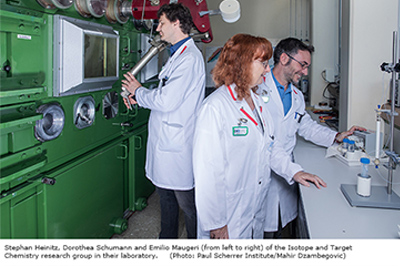
Emilio Maugeri, Stephan Heinitz and Dorothea Schumann (from left to right) of the Isotope and Target Chemistry research group. (Photo: Paul Scherrer Institute/Mahir Dzambegovic)Virtually all of the present-day lithium-7 in the universe comes from the decayed beryllium-7 which in turn was formed shortly after the big bang. Thus the researchers were looking into the question of whether there might have been less beryllium in the beginning than previously believed, which could clear up the cosmological lithium problem. One of the last possibilities still open to be checked was the so-called neutron capture cross-section of beryllium-7. This value predicts the probability that a beryllium-7 atomic nucleus will capture a free neutron and subsequently decay.

“The neutron capture cross-section of beryllium-7 was last measured, imprecisely by comparison, around 50 years ago”, explains PSI researcher Dorothea Schumann, head of the Isotope and Target Chemistry research group. This key figure should now be investigated at CERN, more accurately than ever before. The beryllium-7 sample needed for this was provided by the PSI researchers.

Years of preparation and test runs

The production and measurement of the beryllium-7 sample was like a one-time theatre performance, for which the researchers had to do around three years of preparatory work and test runs. Beryllium-7 disappears so rapidly through radioactive decay that its quantity is reduced by half roughly every 53 days. Therefore everything had to be in position before the actual run at both PSI and CERN, as well as for transportation between the two institutions – so that as little time as possible would elapse between the production of the sample and the measurement.

The idea for the experiment arose in 2012. PSI researcher Schumann knew that she could extract the rare beryllium-7 from the cooling water of the Swiss Spallation Neutron Source SINQ, which is operated at PSI for experiments with neutron beams.

“Here at PSI, with SINQ and the other large research facilities, we have unique sources for harvesting rare radioactive isotopes”, Schumann says. “For the researchers who operate and use these facilities, these isotopes are a by-product – but for many other research institutions, they are very useful and urgently needed”. Like gold prospectors, Schumann and her research group extract these rare isotopes. “And then we act as an interface to other researchers outside PSI who are interested in enriched samples of these isotopes.”

CERN is interested

Researchers at CERN showed interest in obtaining a sample of beryllium-7. “With it, they knew they could tackle the cosmological lithium problem”, Schumann explains.

So Schumann and her team set about the preparations: Within PSI, Schumann made contact with the scientists and engineers who operate SINQ. A special filter system meeting the isotope researchers’ specifications was connected to the cooling water of SINQ, which could collect material containing a suitable amount of beryllium-7 over a period of about three weeks. “To the layperson, our filter can be thought of as being quite similar to the familiar household filter for tap water”, says Stephan Heinitz, scientist in the research group of Schumann.

Then, among other things, the materials gathered in this way had to be chemically separated. “This requires special expertise – which luckily we have in my research group”, Schumann says. Nevertheless, this procedure took another week and had to be carried out, for protection against radiation from the material, in a so-called hot cell – a laboratory set up for the manipulation of radioactive materials.

A transport weight of 800 kilograms

From there, the concentrated sample of beryllium-7 had to be transferred into a suitable mount, and this in turn into an apparatus about the size of a cooking pot, which met specifications for use in the experimental setup at CERN. “The apparatus as well as the radiation-proof containers for transferring the material – all of it was custom-made”, relates Emilio Maugeri, another researcher in Schumann’s group.

Finally, arrangements had to be organised and approved to transport a heavy load of radioactive materials from PSI to CERN.

“The actual sample that we delivered to CERN contained only a few millionths of a gram of beryllium-7”, Schumann explains. “But the required shielding brought the transport weight up to 800 kilograms.”

Within the critical time period, everything succeeded according to plan. The CERN researchers were able to carry out the experiment with the PSI sample and determine the thus-far insufficiently known neutron capture cross-section of beryllium-7.

The cosmological lithium problem remains unsolved

The CERN and PSI scientists and their collaborators from 41 other research institutions were especially interested in a particular decay path of beryllium-7: the probability of a process by which an atomic nucleus of beryllium-7 traps a free neutron – that is, an elementary particle with no net charge. At the same time one of the protons leaves the beryllium nucleus. Thus, since the nucleus now contains one less proton (and one more neutron), the beryllium atom transforms itself into an atom of the element lithium: It becomes lithium-7. The so-called neutron capture cross-section – that is, the probability of this entire process – depends on the energy that the free neutron has. Therefore the researchers took advantage of the possibility at CERN to vary the energy of the neutrons, and they made a measurement series for a wide range of neutron energies.

Yet these latest measurements of the neutron capture cross-section have not solved the cosmological lithium problem. As Schumann puts it: “With the new measurements, the CERN researchers were able to determine the neutron capture cross-section so precisely that it now is clear: The cosmological lithium problem can’t be solved in this way; it still persists. The scientific community will have to keep looking for an explanation.”

Источник: eurosafe-forum, November 2019

Теги: CERN, PSI, test

Consistent criticality and radiation studies of Swiss spent nuclear fuel: The CS2M approach

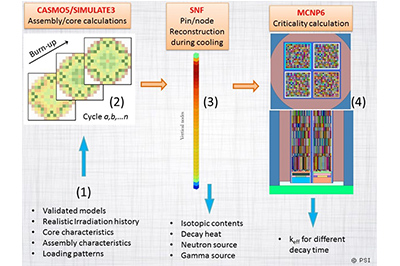
The future of the spent nuclear fuel (SNF) is the focus of a large number of recent studies regarding intermediate and long-term storage. Three quantities are of prime importance considering the fuel itself: its long-lived radioactivity content (actinides and fission products), heat generation (also called decay heat) and radiation level (or source term). The high radiation level implies the use of shielding and remote handling systems, the heat generation limits the stored amount in a given volume of rock, and the radioactivity content means that the criticality safety of a repository can be an issue for the duration of the repository. Some of these quantities can also be measured (decay heat, radiation level), but systematic measurements on the thousands of SNF cannot be performed in practice (in Switzerland alone, about 12,000 fuel assemblies are expected to be finally discharged). Therefore the dependence on calculated quantities is capital. These three quantities are linked together as the isotopic content of a SNF is responsible for the produced decay heat, the emitted radiations and the possibility of criticality events: for instance, the correct knowledge of the amounts of 235U, 239Pu, 244Cm, and other isotopes is at the start of the correct assessment of the emitted number of neutrons, gammas, and of the criticality occurrence. In this work, we are proposing to calculate such isotopic content, decay heat, neutron & gamma sources and the neutron multiplication factor at once, taking into account the individual history of all fuel assemblies based on the LRT/STARS CMSYS platform containing reference validated plant- and cycle specific models for in-core reactor operation. Concretely, this coupling of CMSYS implies an enlargement of the methodology, hereinafter referred to as CS2M , to out-of-core spent fuel analyses involving four specific codes: CASMO and SIMULATE, SNF and MCNP. Thus, the CS2M calculation scheme consists of two specific couplings: 1) CMSYS with SNF to reconstruct isotopics and calculate their evolution during decay; 2) SNF to MCNP using the in-house COMPLINK methodology to initialize the material compositions of all fuel rods in the MCNP models.

The number of UO2 and MOX assemblies for a real Swiss Pressurized Water Reactor (PWR) is presented in Fig. 1 as a representative example.

The method proposed in this work is summarized in Fig. 2, allowing to consistently calculate criticality quantities (being the neutron multiplication factor keff), emission source (neutron and gamma) and decay heat. Such approach can provide these quantities considering the individual history of each irradiated fuel assembly and is articulated around the four following steps:

  1. each assembly, core and cycle is represented by validated models and data,
  2. these CASMO/SIMULATE models are applied to reconstruct the lattice data file with isotope concentrations and power history data file,
  3. the SNF code is using the previous information to provide individual isotopic concentrations for each pin and segment, together with the assembly neutron/gamma source and decay heat quantities, for different cooling times,
  4. the isotopic concentrations for each cooling time is passed to a MCNP model (for each pin and vertical segment) for a specific canister, allowing to calculate keff.

Application to a Reference Pressurized Water Reactor (PWR)

To illustrate the capabilities of this approach, as mentioned, a reference PWR core is considered where both UO2 and MOX fuel assemblies have been operated. This study spans over 34 reactor cycles, representing about 35 years of operation. In total, close to 2000 assemblies were used in multiple cycles, being more than 6000 assembly-cycles (90% UO2 and 10% MOX). To cover a large range of assembly burnup values, the present criticality and radiation source calculations are performed for each assembly at the end of each cycle, being discharged for final disposal or not (see Fig. 1).

For the time being, only actinides are considered and fission products are therefore not accounted in the calculation of the radiation doses. This comes from the fact that the current version of the SNF code does not provide the full amount of fission products of interest (this is not the case with the latest version of this code). As an illustration, examples for two specific assemblies (one UO2 and one MOX) are presented in Fig. 3. As mentioned for the criticality calculations, it is assumed that the canister is loaded with four of the same assemblies. The calculations of criticality and radiation sources are also presented for different cooling times.

A loading curve is defining the limit between an acceptable canister loading (with a keff value lower than a given limit), and a loading leading to a keff value higher than the limit. In the following, the limit is fixed at keff = 0.95 (note that this value was taken as only an illustrative example, while the definition of a real “Upper Subcritical Limit” applied in practice goes beyond the scope of the present discussion). To calculate the loading curve, an MCNP model is used to calculate keff, with four equal assemblies. Inserting the same assemblies together in the canister is a simplification with the only purpose of avoiding an optimization step (e.g. to minimize specific radiation quantities). In a realistic canister loading, all assemblies will be different. By performing such study for all assemblies previously presented, a loading curve can be obtained, as presented in Fig. 4.


As the radiation sources are calculated for each assembly-cycle, the quantities such as activities, decay heat, and the neutron & gamma emissions can be compared with the keff values. An example of comparison with the calculated activity is presented in Fig.5. Note that the quoted activity is given for a single assembly and not for the canister. Also, as this study represents the case of “actinides only” for the criticality study, the following comparisons need to be extended to the case “actinides and fission products” to be relevant to realistic studies.

As a conclusion, this new study presents the possibility to calculate radiation quantities for spent fuel assemblies and criticality values for their handling and storage, based on their specific assembly isotopic inventory. Such inventory comes from an in-core fuel management system, validated core models and on four state-of-the-art codes: CASMO, SIMULATE, SNF and MCNP6. The importance of the assembly irradiation history was illustrated, notably of the cooling time between cycle for the assembly activity, decay heat and gamma emission. By considering the specific assembly histories, optimization for canister loading can be done for criticality, activity and decay heat in order to minimize risks and environmental irradiation. In a follow-up study, the case of heterogeneous assembly loading will need to be analyzed for the minimization of criticality risk and radiation emission. Also, the case of “actinides only” for criticality study will be extended to “actinides and fission products”. And finally, as this work is based on a fully automated scheme from the first irradiation of a specific assembly to its final disposal, a full uncertainty propagation can be performed, for instance by taking into account the variation of nuclear data.


Источник: eurosafe-forum, November 2019

Теги: SNF

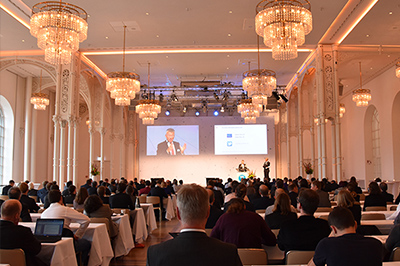
EUROSAFE 2019: International Conference on Nuclear Safety in Cologne

More than 220 representatives from science and research, authorities and industry met this week in Cologne for this year’s EUROSAFE. Participants from more than 28 countries came together at the conference of the European Technical Safety Organisations Network (ETSON) to discuss current topics related to the safety of nuclear installations, radioactive waste management and radiation protection.

Programme: lectures, Science Slam, TSO Café

Hans WannerThe programme consisted of a variety of specialist lectures, in-depth seminars and presentations on overall aspects of nuclear safety. Hans Wanner, Director General of the Swiss Federal Nuclear Safety Inspectorate (ENSI) and current Chairman of the Western European Nuclear Regulators Association (WENRA), reflected in the plenary session on the benefits of international peer reviews for improving nuclear safety.

As in previous years, four young scientists competed for the ETSON Award in a science slam. Matthias Dewald (GRS) convinced both the jury and the audience with his lecture on the use of accelerator mass spectrometry in the decommissioning of nuclear facilities and took first place. Simone Tillmann, also a staff member of GRS, took second place. In her short lecture, she presented modelling approaches for the safety assessment of facilities for radioactive waste management at the “Vector” site in the Chernobyl exclusion zone. The award, which is presented annually by the Junior Staff Programme, honours the work of young scientists developed within the framework of cooperation between members of the ETSON network. Places 1 and 2 are endowed with 3,000 and 2,000 euros respectively.

At the end of the first day, Maarten Steinbuch, professor at Eindhoven University of Technology, gave a fascinating lecture on the opportunities and risks of artificial intelligence and robotics.

Speakers CornerOn the second day of the conference, high-level representatives from the European Commission, ETSON and WENRA and the nuclear industry met to discuss with the audience the benefits of international networks in the field of nuclear safety. In three sessions, the experts exchanged views on research and assessment of nuclear safety, disposal and decommissioning as well as radiation and environmental protection.

In addition to the variety of presentations and discussions, the EUROSAFE conference also offered the opportunity to get in contact with the ETSON member organisations. A total of 16 institutions – including the International Atomic Energy Agency (IAEA) – introduced themselves this year with stands and presentations at the TSO Café.


Источник: eurosafe-forum, November 2019


Обсуждение обращения с очищенной водой на АЭС «Фукусима-I»

18 ноября в Агентстве природных ресурсов и энергетики (Agency for Natural Resources & Energy – ANRE) Министерства экономики, торговли и промышленности Японии (METI) состоялось заседание комитета, посвященное обращению с очищенной загрязненной водой на АЭС «Фукусима-I». Комитет обсудил вопросы хранения и удаления очищенной воды после того, как компания «Tokyo Electric Power Co., Inc.» (TEPCO) представила график.

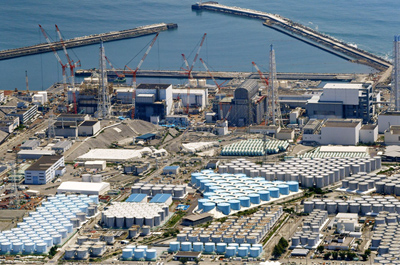
По сообщению компании TEPCO, на конец октября с помощью усовершенствованной системы обработки жидкости (Advanced Liquid Processing System – ALPS) обработано около 1,17 млн м3 воды, которая теперь хранится в резервуарах. Общее содержание трития в воде оценивается примерно в
856 трлн Бк. Оборудование установки ALPS предназначено для удаления нескольких нуклидов. Исходя из этого, компания выполнила различные расчеты, предполагая, что загрязненная вода будет продолжать образовываться на уровне 150 м3 в день и что содержание трития будет составлять 860 трлн Бк на 1 января 2020 г. Расчеты основывались на следующих гипотетических условиях: количество трития будет уменьшаться на фиксированное количество каждый день в результате удаления и естественного разложения; удаление начнется в разное время в будущем с расчетами по четырем различным исходным сценариям; удаление будет завершено в соответствии с окончанием вывода из эксплуатации с расчетами для двух различных сценариев завершения, через три десятилетия (к 31 декабря 2041 г.) и через четыре десятилетия (к 31 декабря 2051 г.).

На совещании, состоявшемся в августе, компания TEPCO представила свой план по обеспечению резервуаров сварного типа объемом около 1,34 млн м3 для хранения воды после обработки на установке ALPS к концу декабря 2020 г. Компания также представила свои расчеты, показывающие, что эти резервуары будут заполнены к лету 2022 г. или около того.

Компания TEPCO сообщила, что если удаление очищенной воды должно начаться в 2020 г., то годовой объем трития будет уменьшен примерно на 51 трлн Бк в сценарии, в котором удаление будет завершено к концу 2041 г., и примерно на 32 трлн Бк в сценарии, где удаление прекращается к концу 2051 г. Компания TEPCO также сообщила, что в обоих случаях, учитывая такие предположения, количество воды, удерживаемой в любой момент времени, никогда не превысит вместимость резервуара.

С другой стороны, в сценариях, где удаление не начнется в 2020 г., а скорее в 2025, 2030 или 2035 гг., количество воды превысит емкость резервуаров летом 2022 г. во всех случаях. В частности, в сценарии для 2035 г. количество воды достигнет приблизительно 2 млн м3 к началу удаления.

Агентство ANRE продемонстрировало различные уровни и воздействие радиации при сбросе воды, обработанной на установке ALPS, с использованием модели оценки Научного комитета Организации Объединенных Наций по воздействию атомной радиации (UNSCEAR).

Что касается сброса в море, то в расчетах учитывалось как внешнее воздействие песчаных берегов, так и внутреннее воздействие морской флоры и фауны. Предполагая, что очищенная вода, хранящаяся в резервуарах, будет удалена в течение одного года, радиационный эффект будет составлять примерно от 0,052 до 0,62 мкЗв, что заметно меньше, чем годовой естественный уровень излучения в 2,1 мкЗв.

Затем один из членов комитета спросил о практических сроках, которые будут учитывать разбавление и мониторинг. Другой спросил о возможности повторного использования резервуаров после выпуска воды. Отвечая на эти вопросы, представители компании TEPCO сообщили, что, хотя такие действия могут быть возможными, в основном предполагалось демонтировать резервуары и удалить их после выпуска воды.

Источник: Japan Atomic Industrial Forum, 21.11.2019

План удаления топлива на АЭС «Фукусима-I»

Компания «Tokyo Electric Power Holdings Co.» (TEPCO) и корпорация «Nuclear Damage Compensation and Decommissioning Facilitation Corporation» (NDF) представили документацию, описывающую их план по удалению отработавшего топлива и части обломков топлива из блока №2 АЭС «Фукусима-I».

Рассматривалось несколько вариантов. Теперь выбран единый вариант в качестве лучшего плана. Ключевая особенность этих планов заключалась в том, как получить доступ к площадке для перегрузки топлива на блоке №2 для удаления отработавшего топлива. Один план предусматривал демонтаж всей крыши и стен площадки для перегрузки топлива, а затем установку сверху здания для удаления топлива, аналогично блокам №3 и 4. Другой план предусматривал только демонтаж крыши, чтобы получить доступ. Третий план не предусматривал демонтаж здания. Этот третий вариант выиграл, и это ведет к будущим событиям, является значительным шагом вперед в этой работе. Этот новый план также превратился в план по удалению части обломков топлива через ту же установку для перегрузки топлива.

Уровень радиации на площадке для перегрузки топлива энергоблока № 2 после аварии был высоким. Это предотвратило любой прямой вход рабочих. В 2018 г. предпринимались усилия по удалению небольших частей оборудования и дезактивации площадки для перегрузки топлива с помощью дистанционного оборудования. Этой недавней работе способствовало добавление воздушного шлюза на стороне блока №2.

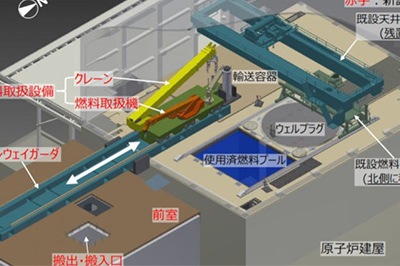
Новый план не предусматривает удаление панели крыши. Компания TEPCO описывает новое оборудование для удаления отработавшего топлива как «миниатюрное». Вместо установки нового мостового крана и крана для перемещения топлива, в этой новой системе используется небольшой стреловой кран, установленный на полу, для выполнения всех задач на площадке для перегрузки топлива. Небольшой дверной проем будет врезан в бетонную стену между двумя стеновыми колоннами, избегая любого повреждения конструкции.

Были выявлены четыре проблемы, связанные с вывозом отработавшего топлива – потенциальное радиоактивное рассеяние пыли, воздействие на рабочих, инфильтрация дождевой воды, расположение наземного рабочего двора.

Предыдущие концепции удаления крыши и стен вызывали серьезные опасения в связи с этой работой из-за возможных выбросов радиоактивной пыли в окружающую среду. Радиоактивная пыль от аналогичной работы на блоке №3 была обнаружена очень далеко, в префектуре Мияги. Поскольку эта пыль может содержать альфа-излучение и микрочастицы реакторного топлива, она представляет значительный риск. При выбранном плане единственным новым отверстием в площадке для перегрузки топлива будет проходная дверь для стрелового крана, через которую будут отправляться контейнеры для перемещения отработавшего топлива, чтобы удалить их из здания.

Снижение уровня радиации на площадке для перегрузки топлива и добавление экранирования улучшило условия. Эти действия сделали эту зону потенциально безопасной для очень ограниченного входа людей. Компания TEPCO утверждает, что работники могли бы на короткое время выйти на работу, требующую вмешательства человека.

Инфильтрация дождевой воды всегда вызывает беспокойство. Дождевая вода потенциально может смывать радиоактивную пыль из здания реактора. Она также может повредить оборудование, которое в настоящее время функционирует внутри блока №2.

На одной стороне блока №2 идет текущая работа по демонтажу вентиляционной башни блоков №1 и 2. Эта наземная зона недоступна для работ по удалению топлива на блоке №2. Для этого плана удаления топлива была выбрана противоположная сторона.

Набор новых стреловых кранов на рельсах будет использоваться для обработки топлива в бассейне, для удаления контейнеров для транспортировки топлива и для перемещения контейнеров в шахте лифта нового здания.

Старый мостовой кран и кран для обращения с топливом останутся на площадке для перегрузки топлива. Мостовой кран в настоящее время находится в положении, указанном на чертеже. Кран для обращения с топливом необходимо будет перенести в место над шахтой реактора. Это потребует некоторого метода для перемещения крана, поскольку все электрические системы повреждены.

Контейнер является новым типом. Этот контейнер значительно уже, чем стандартные транспортные контейнеры, используемые для удаления топлива на блоке №4. Изменение контейнера потребовалось из-за меньших стрел кранов, которые будут использоваться для перемещения контейнеров.

Эта новая концепция также повысила возможность использования этой же системы для удаления осколков топлива из корпуса реактора. Компания TEPCO признает, что концепция находится только на ранней стадии исследования, но есть потенциал для перепрофилирования этого оборудования после удаления отработавшего топлива.

Корпорация NDF исследует этот план более подробно. План включает возможность использования этого оборудования для извлечения осколков топлива. Корпорация NDF подчеркивает, что эта концепция проекта еще не подтверждена. План 1 включает использование контейнера для извлечения топлива из бассейна и осколков топлива. План 2 предусматривает контейнер для извлечения осколков топлива и навесную стойку для извлечения топлива из бассейна. План предусматривает индивидуальную установку каждой конструкции. Это устанавливает приблизительный план перепрофилирования оборудования для удаления отработавшего топлива.

Корпорация NDF предупреждает, что часть концепции удаления отработавшего топлива должна включать меры предосторожности против землетрясений. Корпорация также предлагает проверить новую концепцию крана в качестве макета перед установкой в блоке №2. Рекомендуется план технического обслуживания и ремонта крановой системы, а также план вмешательства человека, если это необходимо. Это будет включать надлежащую защиту для работников при входе в здание. Бόльшая часть работ по техническому обслуживанию может быть выполнена путем перемещения стрелового крана в новое здание. Это снизит уровень воздействия на работников. Прямая работа на площадке для перегрузки топлива может быть возможной и в случае неисправности оборудования.

Этот план является крупной разработкой. Это устраняет потенциальный риск дальнейшего разрушения здания на месте, что является серьезной проблемой. Теперь есть прямой путь для удаления отработавшего топлива. Установка воздушного шлюза и этот план для другого здания, предназначенного для удаления контейнеров, подготовили основу для будущего удаления обломков топлива.

Источник: SimplyInfo, 20.11.2019

Оценка образования трития на АЭС «Фукусима-I»

Компания «Tokyo Electric Power Holdings Co.» (TEPCO) впервые представила оценку ежегодного количества радиоактивного трития, образующегося на АЭС «Фукусима-I».

Объем будет варьироваться от 27 трлн до 106 трлн Бк, в зависимости от даты начала и времени окончания процесса удаления, согласно отчету компании, представленному подкомитету Министерства экономики, торговли и промышленности. Для сравнения, с действующей АЭС обычно сбрасывает жидкие радиоактивные отходы, которые содержат тритий (радиоактивную форму водорода) от нескольких сотен миллиардов до 100 трлн Бк в год, согласно данным министерства. В соответствии с этим сравнением министерство заявило, что не будет возникать проблем со здоровьем, связанных с облучением тритием, удаляемым с АЭС «Фукусима-I».

Компания TEPCO произвела предварительные расчеты, обосновав влияние длительного хранения загрязненной воды. Было установлено, что общее количество трития, содержащегося в радиоактивной воде, хранящейся в резервуарах, по состоянию на январь 2020 г. составит 860 трлн Бк. Установлены четыре даты начала процесса удаления – в начале 2020, 2025, 2030 и 2035 годов. По оценке предполагались два конечных времени для удаления – в конце 2041 и 2051 гг. – на основе графика выполнения работ, установленного правительством и компанией, которые прогнозировали завершение вывода реактора из эксплуатации через 30–40 лет. Ожидается, что количество трития естественным образом уменьшится с течением времени. Однако оценка показала, что чем позже будет дата начала, тем больше будет годовой объем для удаления.

После того, как землетрясение и цунами в 2011 г. повредили АЭС в префектуре Фукусима, компания TEPCO обработала и сохранила большое количество воды, загрязненной радиацией, в резервуарах на территории АЭС. Даже после очистки с помощью системы фильтрации загрязненная вода все еще содержит тритий, который будет выделяться, когда вода будет сбрасываться в океан или удаляться другим способом. Объем загрязненной воды продолжает накапливаться в результате охлаждения расплавленного ядерного топлива и попадания подземных вод.

Компания TEPCO заявила, что не может продолжать установку большего количества резервуаров для хранения загрязненной воды из-за нехватки места на площадке и что все резервуары будут заполнены к лету 2022 г. Если процесс удаления к тому времени еще не начнется, компании TEPCO придется построить больше резервуаров для хранения воды, превышающих лимит, что приведет к задержке в строительстве других объектов, необходимых для работ по выводу из эксплуатации АЭС «Фукусима-I».

Источник: Asahi Shimbun, 18.11.2019

Очистка объектов Министерства энергетики

На Совещании Палаты представителей по очистке ядерных объектов (House Nuclear Cleanup Caucus) сообщили о прогрессе на объектах Управления по обращению с радиоактивными отходами (EM) Министерства энергетики и о продолжении успешного выполнения миссии управления EM.

В Ханфорде завершено перемещение ила из бассейна K на завод T на центральном плато площадки, что значительно снизило риск для реки Колумбия. В Ок-Ридже малые предприятия способствовали успешному ускорению очистки.

В Саванна-Ривере отмечено успешное завершение процесса удаления актинида (Actinide Removal Process – ARP) и завершение модульного блока для извлечения каустического растворителя (Modular Caustic Side Solvent Extraction Unit – MCU), предшественника установки по обработке солевых отходов (Salt Waste Processing Facility – SWPF), которая готовится к работе. В дополнение к запуску установки SWPF в Саванна-Ривере, ожидается, что в эксплуатацию будет введена Интегрированная установка по обработке отходов (Integrated Waste Treatment Unit) на площадке в Айдахо и установка по обработке низкоактивных отходов с прямой подачей (Direct Feed Low Activity Waste – DFLAW) в Ханфорде. Эти проекты позволят управлению EM ускорить процесс переработки отходов из резервуаров, одного из самых сложных потоков отходов. В Айдахо предстоит завершение обработки отходов в рамках проекта по усовершенствованной обработке смешанных отходов.

На проекте по восстановлению хвостохранилищ уранового завода в Моабе (UMTRA) отмечено, что 10 млн тонн отходов было перемещено из хвостохранилища в Моабе в специально спроектированную камеру для удаления отходов, расположенную на расстоянии 56,3 км в Кресчент-Джанкшн.

Источник: EM Update. Vol. 11, Issue 45, 19.11.2019

Демонтаж здания для ремонта железнодорожных вагонов

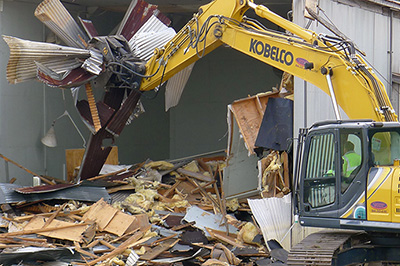
Работники Управления по обращению с радиоактивными отходами (EM) демонтировали здание, использовавшееся для ремонта экранированных железнодорожных вагонов для перевозки контейнеров, в которых ядерные материалы перемещали из реакторных зданий на объекты химической обработки в Саванна-Ривере. Подрядчиком является компания «Savannah River Nuclear Solutions» (SRNS).

Успешная дезактивация и вывод из эксплуатации здания является частью работ по очистке устаревших объектов и подготовкой к будущим миссиям. Рабочие дезактивировали и вывели из эксплуатации 292 конструкции в Саванна-Ривере.

Здание и вагоны для перевозки контейнеров устарели после закрытия последнего реактора на площадке в 1993 г. Демонтаж здания для ремонта вагонов представляет собой проблему из-за низкого уровня загрязнения, обнаруженного внутри конструкции. Вывод из эксплуатации любого радиологически загрязненного объекта требует дополнительных мер безопасности для обеспечения защиты сотрудников и субподрядчиков – компаний CTI и «Associates». Работая в качестве участников проекта компании SRNS, сотрудники компании CTI выполняли все контрактные действия, связанные с дезактивацией и выводом из эксплуатации этого объекта, как безопасно, так и без выброса загрязнений в окружающую среду.

Источник: EM Update. Vol. 11, Issue 45, 19.11.2019

Вывод из эксплуатации АЭС «Ойстер-Крик» и «Пилгрим»

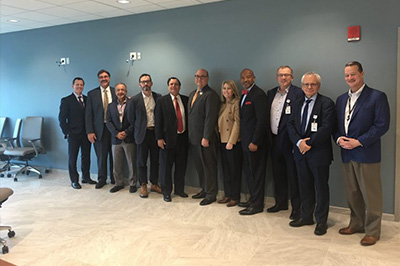
29 октября 2019 г. члены Консультативного совета по выводу из эксплуатации компании «Holtec International» собрались для оценки достижений компании за первый год работ по выводу из эксплуатации АЭС «Ойстер-Крик» (ранее принадлежавшей компании «Exelon») и «Пилгрим» (ранее принадлежавшей компании «Entergy»). Этот совет состоит из известных отраслевых деятелей, представляющих многих ведущих ядерных операторов Северной Америки.

Компания «Holtec Decommissioning International» (HDI, дочернее предприятие компании «Holtec») является лицензированным оператором для АЭС, приобретенных в качестве лицензированного владельца другим дочерним предприятием компании «Holtec» – Компанией по управлению ядерными активами (Nuclear Asset Management Company – NAMCO). В 2018 г. компания NAMCO приобрела АЭС «Ойстер-Крик» и «Пилгрим». Основным дочерним предприятием компании HDI по выводу объектов из эксплуатации является компания «Comprehensive Decommissioning International» (CDI). Центральным элементом обсуждений в Совете был комплекс новаторских подходов, разработанных компаниями HDI и CDI для максимизации эффективности, что будет способствовать повышению безопасности персонала и минимизации количества радиоактивных отходов, а также экологического воздействия Программы вывода из эксплуатации.

Совет был впечатлен новым поколением контейнеров «Holtec» для ядерных отходов, которые могут сократить количество транспортных упаковок более чем на 80%. Это следует считать большим шагом вперед в обеспечении экологической безопасности.

Было проведено углубленное обсуждение модели контейнеров компании HDI, которая фокусируется на безопасности населения и работников, наблюдении за окружающей средой и внимании к сообществу, использует интегрированную структуру управления и объединяет множество процедур и методов обеспечения безопасности, эксплуатации, обеспечения качества и управления на основе уроков, извлеченных из операций на каждой площадке.

Обсуждение инновационных решений для максимизации безопасности в гипотетическом «сценарии пожара с цирконием» было еще одной темой, которой Совет был проинформирован. Компания «Holtec» будет стремиться развернуть свои недавно разработанные стратегии улучшения огнестойкости циркония в будущих блоках АЭС «Палисад» и «Индиан-Пойнт». Еще одной важной темой, где участники внесли ценный вклад, была эффективность программы безопасности, где компания HDI оценивает инновационные подходы.

АЭС «Ойстер-Крик», которая вышла из периода возгорания циркона незадолго до 1 июля 2019 г., в настоящее время проходит процесс сегментации реактора. Каждый показатель производительности встречается или превышается. Основными достижениями на АЭС «Ойстер-Крик» являются успешные усилия компании «Holtec» по использованию максимальной емкости канистры (MPC-89) для минимизации количества упаковок, которые необходимо будет переместить в объединенное хранилище временного хранения HI-STORE компании «Holtec» в Нью-Мексико. Руководство АЭС продолжает регулярно встречаться с местными, государственными и федеральными законодателями и лидерами общин, чтобы держать их в курсе текущих операций по выводу из эксплуатации. На АЭС «Ойстер-Крик» было организовано несколько групп из Тайваня, Японии и США по сравнительному анализу, чтобы представить компании «Holtec» результаты, полученные в ходе текущих работ по выводу из эксплуатации.

АЭС «Пилгрим» все еще находится в «окне огня с цирконием», которое она покинет в марте 2020 г. Многогранный план действий по безопасному выводу из эксплуатации продолжается, в то время как компания HDI взаимодействует с Содружеством штата Массачусетс для продолжения открытого диалога для решения своих проблем.

Источник: Holtec International, 12.11.2019

Подготовка демонтажа зданий в Ок-Ридже

Сотрудники Управления по обращению с радиоактивными отходами (EM) в процессе дезактивации успешно перевели два бывших ядерных объекта в Ок-риджской национальной лаборатории (ORNL) Министерства энергетики в «холодную и темную» стадию.

Эта работа знаменует собой начало следующей крупной очистки в лаборатории ORNL в Ок-Ридже и на Комплексе национальной безопасности Y-12, и работники близятся к завершению основной очистки в Технологическом парке Восточного Теннесси в следующем году. Дезактивация зданий 3010 и 3026 в Ок-Ридже прокладывает путь к будущему демонтажу, устраняя значительный риск в лаборатории ORNL, одновременно открывая землю для будущих исследований и научных миссий. Приведение здания в «холодное и темное» включает в себя изоляцию всех инженерных сетей и обеспечение безопасного конфигурирования конструкции, чтобы работники могли ее демонтировать.

Здания 3010 и 3026 расположены в центральном кампусе лаборатории ORNL, который включает в себя самые старые объекты, требующие значительной очистки в предстоящие годы. Только две горячие камеры остаются на площадке здания 3026 после того, как рабочие разрушили внешнюю конструкцию объекта, и четыре горячие камеры находятся внутри при использовании средств в соответствии с американским Законом о восстановлении и реинвестировании от 2009 г.

В лаборатории ORNL управление EM начнет следующий крупный этап очистки. Запланированные проекты устранят риски и расчистят путь для растущих миссий в одном из самых важных научных центров страны.

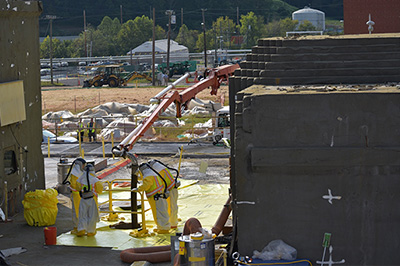
Здание 3010, известное как реактор со сплошным экранированием, было объявлено «холодным и темным» в апреле. Управление EM и компания-подрядчик UCOR в сентябре достигли «холодного и темного» состояния для оставшихся конструкций в Здании 3026, в котором когда-то располагалась Лаборатория разработки радиоизотопов. В здании 3010 работники завершили характеризацию бассейна, в котором находятся облученные предметы из бывшего исследовательского реактора. Опираясь на инновации, сотрудники разработали подводные инструменты, которые позволили им собирать для характеризации образцы из компонентов, содержащихся в бассейне глубиной 8,2 м. Теперь работники готовятся к безопасному и осторожному удалению облученных предметов из бассейна реактора. Кроме того, команды работают, чтобы удалить весь асбест из здания.

В районе здания 3026 сотрудники недавно закончили закачивание и заполнение грунтом в подземном транспортном туннеле длиной 14,3 м, который раньше использовался для загрузки радиоактивных материалов в горячую камеру. Этот важный шаг гарантирует отсутствие миграции загрязняющих веществ во время демонтажа двух горячих камер. В ноябре работники на горячих камерах здания 3026 начнут строить защитную палатку, чтобы покрыть территорию во время демонтажа. Демонтаж горячих камер планируется начать в 2020 г.

Источник: EM Update. Vol. 11, Issue 44, 12.11.2019

Разрешение на расширение хранилища низко- и среднеактивных отходов

В Швеции расширение существующего хранилища SFR для низко- и среднеактивных отходов в Форсмарке было одобрено Судом по земельным и экологическим вопросам в Стокгольме. После одобрения, уже предоставленного ядерным регулирующим органом, правительство теперь примет окончательное решение по заявке.

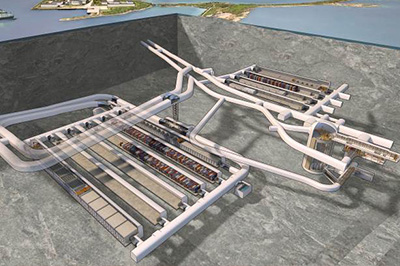
Хранилище SFR в муниципалитете Остхаммар расположено в 60 метрах ниже дна Балтийского моря. Оно состоит из четырех скальных хранилищ длиной 160 метров и камеры в скале с бетонным бункером высотой 50 метров для наиболее радиоактивных отходов. Два параллельных туннеля доступа длиной в 1 км соединяют объект с поверхностью. Работа в хранилище SFR началась в 1988 г. Бόльшая часть короткоживущих отходов, помещенных в хранилище SFR, поступает со шведских АЭС, но в него также помещаются радиоактивные отходы из больниц, ветеринарной медицины, научных исследований и промышленности. В настоящее время на объекте хранится около 63 тыс. м3 отходов, и он заполнен на 60%.

Компания «Svensk Kärnbränslehantering AB» (SKB), ответственная за хранение шведских ядерных отходов, подала заявку в декабре 2014 г., чтобы утроить размер хранилища SFR, добавив еще 170 тыс. м3. Расширенная часть хранилища будет состоять из шести новых камер в породе, каждая длиной 240–275 метров.

Заявка была рассмотрена Управлением по радиационной безопасности (Radiation Safety Authority – SSM) и Судом по земельным и экологическим вопросам. Управление SSM рассмотрело вопросы ядерной безопасности и радиации на установках, как это предусмотрено в Законе о ядерной деятельности страны. Обзор, проведенный Судом по земельным и экологическим вопросам, был основан на Экологическом кодексе. Когда заявки в соответствии с Экологическим кодексом включают вопросы радиационной безопасности, управление SSM обращается в суд.

В январе управление SSM рекомендовало Суду по земельным и экологическим вопросам предоставить разрешение на расширение хранилища SFR в соответствии с Экологическим кодексом Швеции. Проверка управления SSM показала, что строительство и эксплуатация расширения хранилища в Форсмарке компанией SKB могут осуществляться радиологически безопасным образом и что выбранный компанией SKB метод окончательного удаления подходит для достижения радиационной безопасности после закрытия. Во время основного судебного заседания по заявке компании SKB, которое проходило с 23 сентября по 3 октября, управление SSM рекомендовало правительству одобрить заявку.

Суд по земельным и экологическим вопросам одобрил заявку компании SKB на расширение хранилища SFR. Сообщение суда показывает, что окончательная концепция хранилища может удовлетворить очень высокие экологические требования суда, как в отношении долгосрочной безопасности, так и в отношении учета высоких природных ценностей в окружающей среде. Компания SKB прошла два очень важных этапа на пути к расширению хранилища SFR. Компания надеется, что два таких четких заявления также облегчат продолжение процесса получения окончательного разрешения. Расширенное хранилище SFR является важной частью миссии компании по обращению со всеми шведскими ядерными отходами и их удалению таким образом, чтобы это было безопасно для людей и окружающей среды, и сейчас, и в будущем.

Компания SKB отметила, что следующим этапом в процессе выдачи разрешений правительством является принятие позиции по данному вопросу на основе мнений, представленных как судом, так и управлением SSM. Как только будут выданы разрешения, могут начаться строительные работы, которые, по оценкам, продлятся 6 лет.

Источник: World Nuclear News, 14.11.2019

Бурение скважины для размещения хранилища

Компания «Nagra» с 2020 г. начнет бурение в регионе размещения Юра-Ост. Вторая скважина в регионе размещения будет пробурена в общине Бозберг, как и в случае с первой скважиной.

Национальная компания по удалению радиоактивных отходов (National Cooperative for the Disposal of Radioactive Waste – Nagra) будет пробуривать вторую скважину в районе Юра-Ост в общине Бозберг. Буровая площадка Бозберг-2 расположена к востоку от деревни Кестхал на северо-западе территории общины. Строительство начнется, как только позволят погодные условия, но, возможно, придется подождать до начала 2020 г. Буровые работы начнутся летом 2020 г. Ожидается, что скважина Бозберг-1 начнет действовать весной 2020 г.

Скважины завершат общую геологическую картину потенциальных районов размещения. Полученная научная база послужит основой для выбора наиболее безопасной площадки для хранилища. Скважины предназначены для исследования толщины, плотности и состава вмещающей породы Глины Опалинус (Opalinus Clay), в которой будет построено хранилище. Федеральное правительство участвует в процессе выбора площадки, который регулируется «Отраслевым планом для глубоких геологических хранилищ».

Компания «Nagra» подала в общей сложности 23 заявки на получение разрешений на глубокие скважины, и на сегодняшний день было получено 11 юридических разрешений. Сколько скважин на самом деле нужно пробурить, чтобы завершить общую геологическую картину, зависит от результатов текущей работы, но не планируется пробурить все 23 скважины. Компания «Nagra» создала горячую линию для вопросов и забот местных жителей и других заинтересованных лиц. На полигонах также есть павильон для посетителей и регулярные дни открытых дверей для общественности.

Источник: Nagra, 12.11.2019

Разработки канистр для удаления отходов

Компании «Deep Isolation» и «NAC International» должны сотрудничать в проектировании, разработке и производстве технологии компании «Deep Isolation» для удаления канистр.

Компания «Deep Isolation» располагается в Беркли (штат Калифорния) и разработала решение для обращения с отработавшим ядерным топливом (ОЯТ) и высокоактивными отходами (ВАО) путем их размещения в коррозионностойких канистрах, размещаемых в глубоких горизонтальных скважинах. В рамках соглашения обе компании будут сотрудничать в продвижении технических аспектов проекта компании «Deep Isolation» для хранения, удаления канистр и оборудования для перемещения ОЯТ и ВАО из существующих хранилищ в хранилище компании «Deep Isolation» с использованием технологий сухого хранения топлива компании NAC.

Благодаря глобальному лидерству компании NAC и продемонстрированному опыту в области безопасности и проектирования контейнеров, существует возможность не только повысить безопасность и качество технологии контейнеров, но и реализовать стратегию обращения с отходами, которая охватывает временное хранение на месте, а также обработку, транспортировку и окончательное удаление.

Компания NAC является дочерним предприятием компании «Hitachi Zosen Corporation» и поставила «большую долю» отработавших топливных систем, используемых при выводе из эксплуатации объектов США, а также разработала и развернула транспортируемые системы хранения для использования на площадках Министерства энергетики США (МЭ).

Технологии и инновации компании «NAC International» хорошо сочетаются с решением компании «Deep Isolation», чтобы гарантировать, что цели хранения, транспортировки и удаления хорошо интегрированы в эффективные стратегии удаления отходов с учетом относительного размера и потребностей ядерно-энергетической программы каждой страны.

Соглашение является вторым стратегическим партнерством, которое будет подписано в этом году компанией «Deep Isolation» после заключения соглашения о сотрудничестве с компанией «Bechtel National, Inc» по продажам, разработке продуктов и внедрению запатентованной технологии компании «Deep Isolation». В соответствии с этим соглашением, о котором было объявлено в июне, компания «Bechtel» должна предоставить поддержку, такую, как управление проектами, финансовые/коммерческие и инженерные возможности для продаж, как на внутреннем, так и на международном рынках, в том числе с МЭ, при этом компания «Deep Isolation» предоставляет компании «Bechtel» возможности для поддержки работы по очистке на площадках федерального правительства США.

Подход компании «Deep Isolation» с использованием скважин предусматривает размещение отходов в коррозионно-стойких канистрах (обычно диаметром 23–33 см и длиной 4,3 м) в горизонтальных скважинах глубоко в породе, которая была устойчива в течение от десятков до сотен миллионов лет. Вертикальный участок доступа (глубина которого может составлять от нескольких тысяч футов до нескольких миль в зависимости от геологии) постепенно изгибается, образуя почти горизонтальный участок захоронения, длина которого может достигать 3,2 км.

Как только отходы будут размещены на месте, вертикальная секция доступа буровой скважины и начало ее горизонтальной секции для удаления герметизируются с использованием породы, бентонита и других материалов, хотя при необходимости канистры все еще можно извлечь. Согласно компании «Deep Isolation», ключевыми преимуществами этого метода являются глубина захоронения и тот факт, что отходы хранятся в подходящей геологической формации значительно ниже уровня грунтовых вод, в породе, которая насыщена рассолом, который не имеет коммерческой ценности и являлся практически застоем в течение миллионов лет. Кроме того, скважины малого диаметра требуют меньших нарушений породы, чем хранилище. Компания «Deep Isolation» в январе продемонстрировала эту технологию, размещая и извлекая прототип канистры с ядерными отходами на глубине 609 м в существующей скважине.

Источник: World Nuclear News, 12.11.2019

Строительство хранилища на Игналинской АЭС

На Игналинской атомной электростанции (ИАЭС) осуществляется строительство хранилища очень низкоактивных отходов (проект B19-2).

После трехнедельного непрерывного процесса было завершено бетонирование трехмодульной фундаментной плиты хранилища. Общая площадь фундаментной плиты составляет 13664 м2, для которой необходимо укрепить 7000 м3 бетона и более 2000 тонн арматуры. Цель проекта – оборудовать инфраструктуру для окончательного упорядочения короткоживущих очень низкоактивных отходов. Благодаря данному проекту будет сооружено хранилище («Landfill»), в состав которого войдут три модуля для короткоживущих очень низкоактивных отходов.

В хранилище предусмотрено разместить и окончательно упорядочить 60 тыс. м3 короткоживущих очень низкоактивных отходов. После завершения строительных работ с 2020 г. планируется провести процедуры окончания строительства и начать эксплуатацию хранилища В19-2.

Хранилище сооружается рядом с другими новыми комплексами ИАЭС, предназначенными для упорядочения радиоактивных отходов, которые необходимы для вывода ИАЭС из эксплуатации, включая промежуточное хранилище отработавшего ядерного топлива (проект В1) и комплекс по упорядочению и хранению твердых радиоактивных отходов (проект В3/4).

Проект В19-2 финансируется средствами Игналинской программы Европейского союза.

Источник: ИАЭС, 11.11.2019